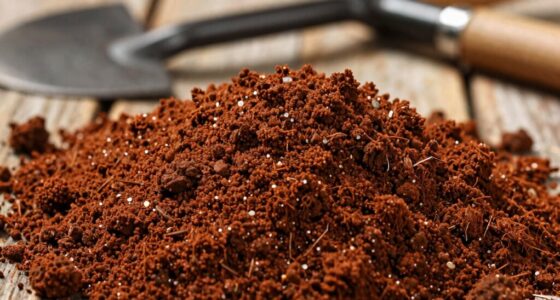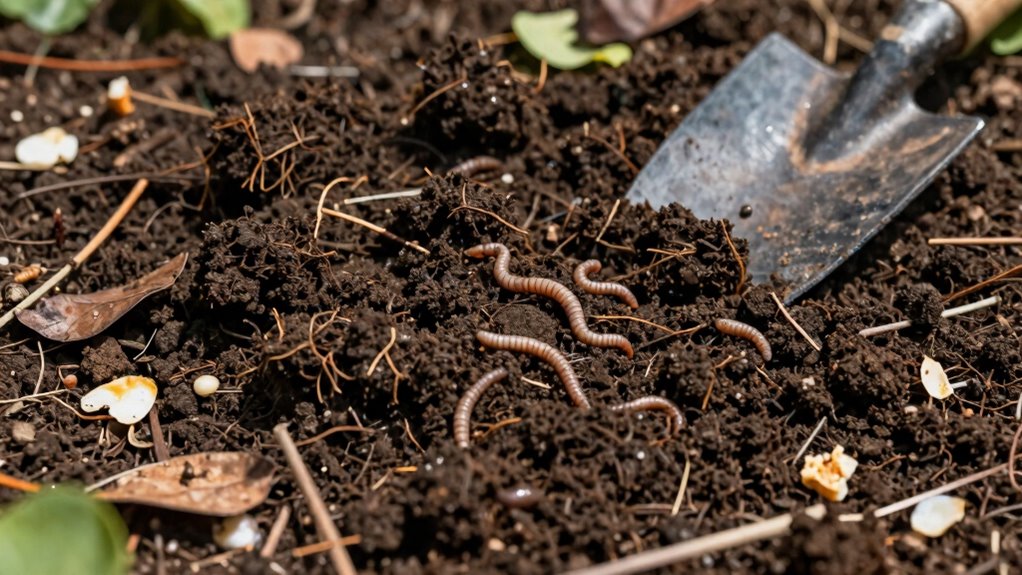

To improve your soil without starting over, focus on adding organic materials like compost, aged manure, and cover crops to boost soil structure and nutrient levels naturally. Test your soil first to understand its specific needs, then tailor amendments accordingly for better results. Incorporate these materials carefully, use sustainable practices to prevent erosion, and build organic matter over time. Staying consistent with these methods can transform your soil—discover more strategies to get the best results.

Get garden gear delivered free — and shop member deals
- Fast, free delivery on millions of items
- Access to Prime Big Deal Days deals on October 6–7
- Prime Video, Amazon Music and more included
Key Takeaways
- Incorporate compost and organic matter to enhance soil structure and nutrient content gradually.
- Conduct soil testing to identify deficiencies and tailor amendments accordingly.
- Use cover crops to naturally add organic matter and improve soil health over time.
- Apply targeted organic amendments based on specific soil needs for efficient improvement.
- Practice soil conservation techniques to prevent erosion and maintain long-term soil vitality.
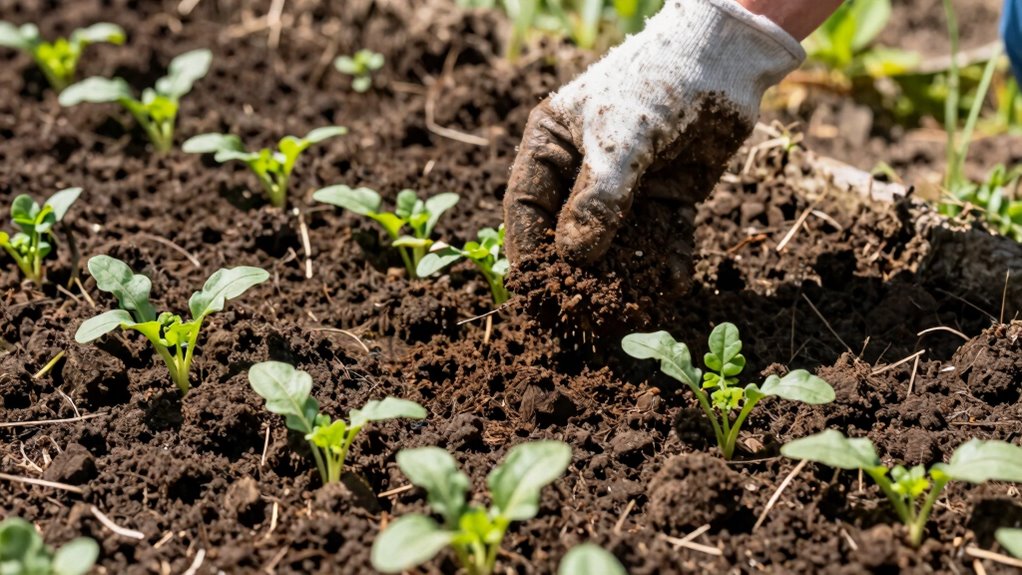
Improving your soil doesn’t always mean starting from scratch; with the right techniques, you can enhance its fertility and structure without a complete overhaul. One of the most effective ways to do this is through composting. Composting benefits your soil by adding rich organic matter that improves its texture, boosts nutrient levels, and encourages beneficial microbial activity. Instead of relying solely on store-bought fertilizers, compost turns kitchen scraps, yard waste, and other organic materials into a natural, nutrient-dense amendment. When you incorporate compost into your soil, you create a healthier environment for plant roots to grow and access essential nutrients more easily.
Composting enriches soil naturally, boosting fertility, structure, and microbial activity without synthetic fertilizers.
Before making any significant changes, it’s wise to start with soil testing. Soil testing gives you a clear picture of your soil’s current health, including pH levels, nutrient deficiencies, and organic matter content. With this information, you can tailor your soil improvement strategies, adding only what’s necessary and avoiding wasteful or harmful amendments. For example, if your soil is too acidic, you might need to add lime; if it’s lacking in nitrogen, compost or specific fertilizers will help. Soil testing makes your efforts more precise and cost-effective, helping you avoid guesswork and ensuring your plants thrive.
Once you know your soil’s condition, you can begin enhancing it by adding organic materials like compost, aged manure, or cover crops. These organic inputs improve soil structure by increasing aeration and drainage while also providing a slow release of nutrients. You don’t need to do a complete overhaul; just layering compost on top of your existing soil and gently working it in can have a significant impact. Incorporating composting techniques can further accelerate soil health improvements. Additionally, using cover crops can contribute to building organic matter naturally and sustainably. Incorporating soil amendments that match your soil’s specific needs can make your efforts even more effective and targeted. To maximize benefits, consider employing organic soil management practices that promote long-term soil vitality.
Engaging in soil conservation methods can also help maintain soil health over time and prevent erosion.
organic compost for soil improvement
As an affiliate, we earn on qualifying purchases.
As an affiliate, we earn on qualifying purchases.
Frequently Asked Questions
Can Composting Alone Improve Soil Quality Effectively?
Yes, composting alone can effectively improve your soil quality. When you add compost, you’re providing organic amendments that boost soil nutrients and structure. It also enhances microbial activity, which is essential for breaking down organic matter and releasing nutrients for plants. Regular composting creates a healthy, fertile environment, reducing the need for chemical fertilizers. Over time, your soil becomes richer, more balanced, and better suited for thriving plants.
How Long Does It Take to See Soil Improvement Results?
Oh, patience, thy name is gardening! You’ll probably see soil improvement results in about 3 to 6 months, but don’t forget to soil test regularly to track progress. Incorporate organic amendments like compost or manure, and you’ll notice healthier plants and richer soil sooner. Remember, consistent care and monitoring accelerate the process, turning your dirt from drab to fab faster than you can say “black gold.”
Are Chemical Fertilizers Necessary for Soil Enhancement?
Chemical fertilizers aren’t necessary for soil enhancement; instead, you can boost soil health naturally. Synthetic nutrients can provide quick fixes, but they may lead to negative pesticide effects and soil degradation over time. By adding organic matter like compost, manure, or cover crops, you improve soil structure and fertility sustainably. This approach promotes healthy microbial activity, reduces reliance on chemicals, and results in a more resilient, nutrient-rich soil that supports thriving plants.
What Are Natural Methods to Reduce Soil Compaction?
To reduce soil compaction naturally, you should incorporate organic amendments like compost or manure, which improve soil structure and promote healthy root growth. Additionally, practice minimal tillage to prevent further compaction, and use cover crops to loosen the soil naturally. These methods increase porosity and aeration, making it easier for roots to penetrate and for water to drain, ultimately enhancing soil health without relying on chemical methods.
How Often Should Soil Be Tested During Improvement?
You should test your soil at least once a year during improvement. Notably, a survey found that only 20% of gardeners test their soil regularly, yet consistent testing leads to healthier plants. Soil testing helps you track pH levels and nutrient content, guiding your improvement frequency. Regular tests ensure you catch deficiencies early, allowing you to adjust amendments promptly and optimize soil health without unnecessary work.
As an affiliate, we earn on qualifying purchases.
Conclusion
So, ironically, the best way to improve your soil isn’t about heavy machinery or starting fresh—it’s about patience, persistence, and working with what you already have. Sure, it might take a bit longer, but that’s part of the charm. You get to watch your soil transform, one amendment at a time, proving that sometimes, the easiest solutions are right under your nose. Who knew that progress could be so quietly satisfying?
As an affiliate, we earn on qualifying purchases.
As an affiliate, we earn on qualifying purchases.
Fall yard work Picks
leaf blowers
As an affiliate, we earn on qualifying purchases.