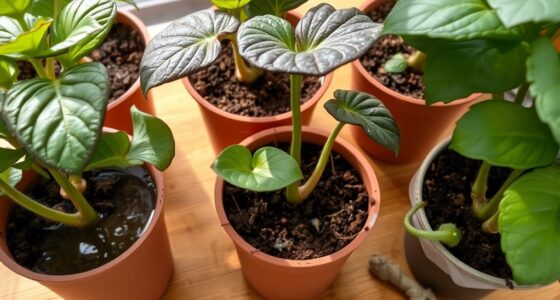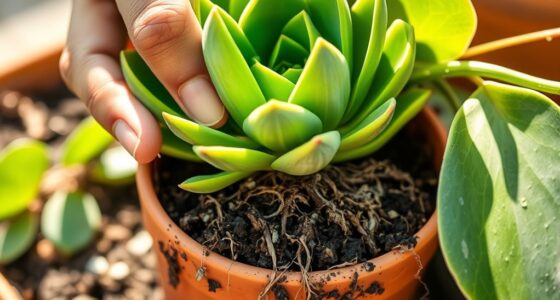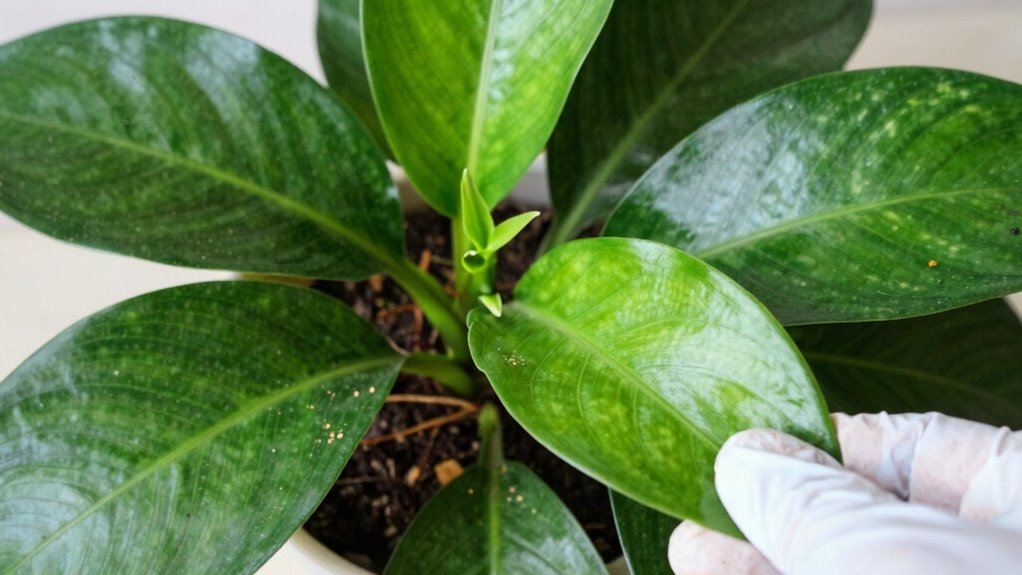

When inspecting houseplants before adding them to your collection, look closely for signs of pests, such as webs, tiny insects, or sticky residues. Check the soil for mold or sour smells, and gently lift the plant to examine the roots for rot. Observe the leaves and stems for discoloration, wilting, or deformities. By thoroughly evaluating these aspects, you’ll guarantee you bring home healthy plants—continue exploring for detailed tips on making the best choices.

Get garden gear delivered free with Prime
- Fast, free delivery on millions of items
- Prime Video, Amazon Music and more included
- Member-only deals all year
Key Takeaways
- Examine the overall plant for signs of pests, damage, or stress, ensuring it appears vibrant and healthy.
- Gently check soil moisture, texture, and smell for signs of poor health or mold.
- Inspect leaves and stems for discoloration, spots, wilting, or deformities indicating disease or pests.
- Lift the plant to assess root health; look for firm, white roots versus soft, brown rot.
- Confirm the plant’s vigor by ensuring leaves are lively, stems sturdy, and there are no signs of yellowing or drooping.
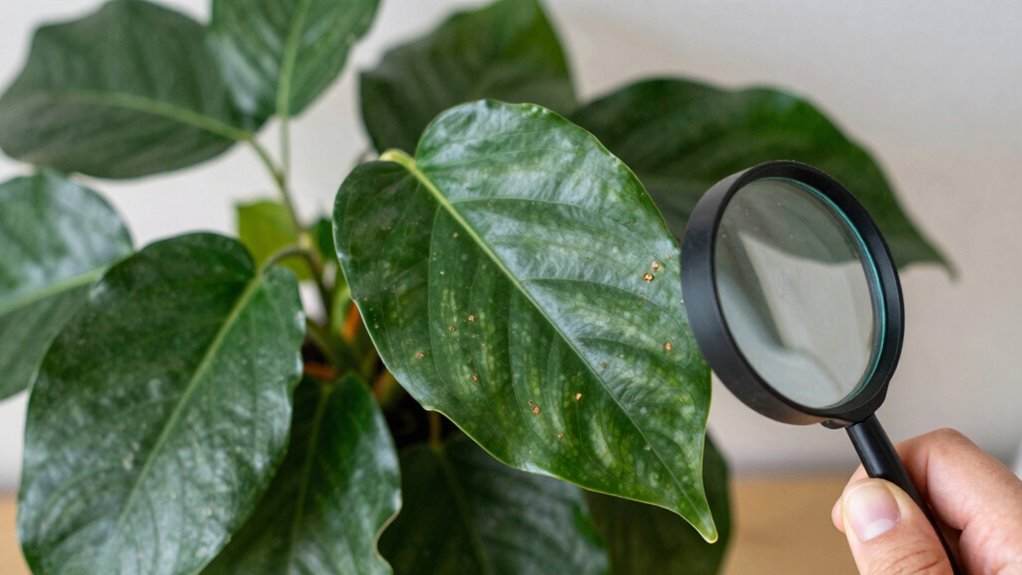
Inspecting your houseplants regularly is vital to keeping them healthy and vibrant. When you’re about to add a new plant to your collection, it’s important to carefully examine it beforehand. Begin by checking the overall appearance of the plant. Look for signs of pests, such as tiny insects, webs, or sticky residues on the leaves and stems. Pest identification is essential because early detection can prevent a small problem from escalating into a full-blown infestation. If you notice any pests, it’s best to avoid acquiring that plant until you’ve treated the issue or to choose a healthier specimen elsewhere.
Inspect plants carefully for pests before adding them to your collection to ensure they stay healthy and pest-free.
Next, take a close look at the soil. Soil health assessment helps you determine whether the plant has been properly cared for and whether it’s suitable for your environment. Gently remove some of the topsoil from the pot to inspect its texture and moisture level. Healthy soil should be crumbly and moist but not waterlogged or excessively dry. If the soil appears moldy, overly compacted, or smells sour, it’s a sign that the plant might have been neglected or that it could introduce disease into your collection. Also, check for any signs of root rot or damage by carefully lifting the plant and inspecting the roots. Healthy roots are firm and white or light tan, whereas rotted roots are brown, soft, or slimy. Regularly inspecting soil condition can help detect potential issues early. Additionally, understanding plant care requirements can assist in evaluating whether the plant has been properly maintained. Recognizing the signs of overwatering or underwatering can further help you gauge the plant’s overall health and needs.
While inspecting, don’t forget to examine the leaves and stems. Look for discoloration, spotting, or wilting, which can be symptoms of pests, disease, or poor soil health. Be attentive to any unusual growth patterns or deformities. If you see any signs of stress or damage, consider whether the plant has been properly cared for in its current environment. This insight can help you decide if it’s worth bringing into your collection or if it’s better to look for a healthier specimen.
Finally, assess the overall vigor of the plant. A healthy houseplant should have lively, firm leaves and a sturdy stem. If the plant appears weak or has a lot of dropped or yellowing leaves, it might not be a good candidate for your collection unless you’re prepared to give it extra care. By conducting a thorough inspection—paying close attention to pest identification, soil health assessment, and overall vitality—you guarantee that your new houseplants will thrive once they’re part of your home. Regularly checking for signs of plant health issues can help you catch problems early and maintain a thriving collection.
houseplant pest inspection tools
As an affiliate, we earn on qualifying purchases.
As an affiliate, we earn on qualifying purchases.
Frequently Asked Questions
How Can I Identify Common Pests on Houseplants?
To identify common pests on houseplants, look closely at leaves, stems, and soil for tiny insects, webbing, or sticky residue. Use insect identification guides or apps to recognize pests like aphids or spider mites. Regularly inspecting your plants helps with pest prevention, catching issues early before they spread. Keep an eye out for discolored or damaged leaves, and address pests promptly to protect your houseplants’ health and beauty.
What Signs Indicate a Plant Is Overwatered or Underwatered?
You’ll notice watering issues through signs like wilting, yellowing leaves, or crispy edges, indicating overwatering or underwatering. Overwatered plants often have soggy, moldy soil and yellow leaves, while underwatered ones show dry, brown foliage and soil pulling away from the pot edges. To prevent problems, check the soil moisture regularly—if it feels damp, hold off on watering; if dry, give your plant a drink.
How Do I Check for Hidden Root Rot?
You suspect hidden root rot lurking beneath the surface, so you gently lift the plant, checking soil moisture first—if it feels overly damp or slimy, danger’s near. Carefully tug at the plant to assess root stability; if it wobbles or pulls away easily, roots may be rotting. Look for discolored, mushy roots or an unpleasant smell. Act quickly before more damage spreads, protecting your new houseplant from unseen decay.
What Soil Conditions Should I Look for During Inspection?
When inspecting soil conditions, check the soil pH to guarantee it’s suitable for the plant species—most prefer slightly acidic to neutral levels. Look for organic matter, which indicates healthy, well-draining soil that retains moisture without becoming waterlogged. Feel the soil’s texture; it should be crumbly and moist but not overly wet or dry. Good soil promotes healthy root growth and overall plant health, so prioritize balanced, nutrient-rich conditions.
How Can I Tell if a Plant Is Stressed or Healthy?
You can tell if a plant is healthy by observing its leaves and overall appearance. Healthy plants have vibrant color, firm leaves, and steady growth, while stressed ones often show yellowing, wilting, or brown spots. Check if the plant is receiving proper light and plant nutrition; inadequate light can cause stress, and poor nutrition weakens the plant. Adjusting these factors helps promote a thriving, healthy houseplant.
soil moisture meter for houseplants
As an affiliate, we earn on qualifying purchases.
As an affiliate, we earn on qualifying purchases.
Conclusion
By taking the time to thoroughly inspect your houseplants, you prevent potential pests and diseases from sneaking into your cozy oasis. Think of it as a modern-day gardener’s ritual, much like a blacksmith checking his tools before forging a sword. With keen eyes and gentle hands, you’ll guarantee your new green friends thrive, turning your space into a lush, tranquil retreat. So, inspect wisely—your home’s botanical future depends on it.
As an affiliate, we earn on qualifying purchases.
houseplant health inspection kit
As an affiliate, we earn on qualifying purchases.
As an affiliate, we earn on qualifying purchases.
Fall yard work Picks
leaf blowers
As an affiliate, we earn on qualifying purchases.