Fungus gnats keep returning because their larvae hide in damp soil and survive treatments. Overwatering creates the moist environment larvae need to thrive, making it easy for them to persist even after adult insects are gone. Simply targeting adults won’t eliminate eggs or larvae underground. To break the cycle, you need to manage soil moisture, remove organic debris, and improve drainage. Keep these tips in mind to understand how to prevent future infestations—you’ll find more helpful solutions ahead.

Get garden gear delivered free with Prime
- Fast, free delivery on millions of items
- Prime Video, Amazon Music and more included
- Member-only deals all year
Key Takeaways
- Larvae survive in damp soil, hatching new adults even after adult control methods.
- Overwatering creates moist environments that promote gnat breeding and larval development.
- Organic debris in soil provides food and breeding sites for larvae, leading to recurring infestations.
- Inadequate soil drainage keeps conditions consistently damp, sustaining the gnat life cycle.
- Focusing only on adult gnats ignores hidden eggs and larvae, allowing re-infestation.
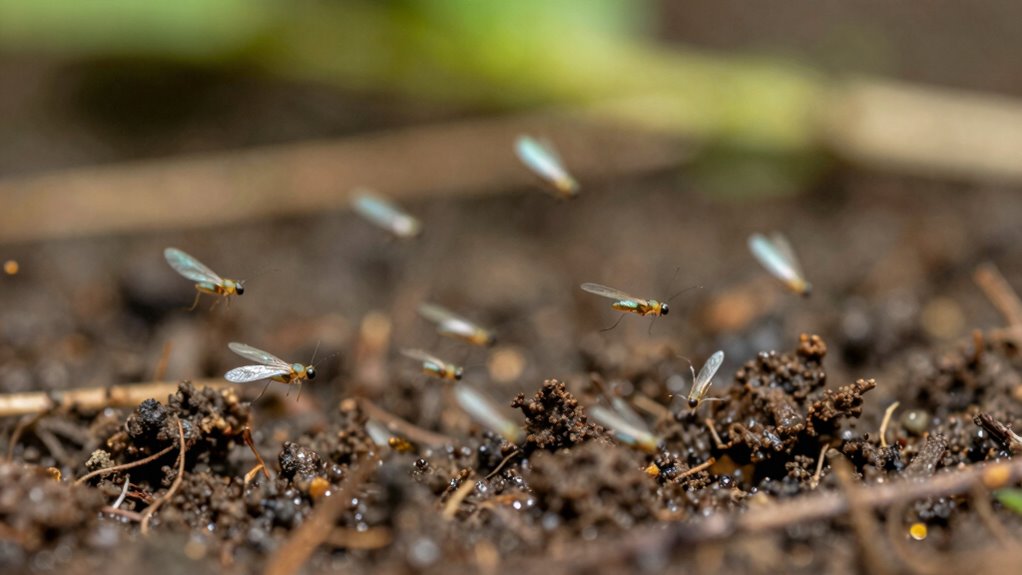
If you’ve recently noticed tiny flying insects around your houseplants, it’s likely that fungus gnats are making a comeback. These indoor plant pests can be persistent, often reappearing even after you think you’ve eliminated them. The reason they keep returning is that they thrive in specific conditions that are easy to overlook, especially when it comes to soil moisture management. Fungus gnats lay their eggs in moist soil, where their larvae feed on organic matter and roots. If you don’t address the moisture levels properly, the cycle continues, and the infestation persists.
One common mistake is overwatering your plants. Many indoor gardeners assume that watering more often helps plants grow, but excess moisture creates an ideal environment for fungus gnat larvae. When the soil stays damp for extended periods, it invites these pests to settle in and multiply. Even if you think you’ve drained or dried out the soil, the damage may already be done. The larvae can survive in moist soil for weeks, waiting for the right conditions to hatch and continue the cycle. That’s why soil moisture management is vital in breaking this cycle. Additionally, understanding the life cycle of fungus gnats can help you implement more effective control measures and prevent future outbreaks. Recognizing the importance of soil health can also contribute to a healthier environment that discourages pests. Proper soil conditions can reduce the likelihood of pests establishing themselves in the first place. Maintaining soil moisture balance is crucial, as it directly impacts the gnat’s ability to thrive and reproduce.
Overwatering creates ideal conditions for fungus gnat larvae to thrive and multiply quickly.
It’s also important to understand that even if you’ve treated the adults, the eggs and larvae can survive hidden in the soil, ready to hatch again once conditions become moist. That’s why a thorough approach is necessary. Using sticky traps to catch flying adults can help you gauge the infestation level, but controlling soil moisture and removing organic debris are more effective long-term solutions. Maintaining consistent watering habits and ensuring proper drainage can significantly reduce the chances of reinfestation. Paying attention to soil drainage helps prevent water from pooling and creating damp environments favorable to gnats. In some cases, applying biological controls like beneficial nematodes can target larvae underground. Ultimately, managing soil moisture and practicing good sanitation are the keys to preventing fungus gnats from coming back repeatedly. If you stay vigilant and adjust your care routine, you’ll give your plants a better chance to stay pest-free.
fungus gnat sticky traps for indoor plants
As an affiliate, we earn on qualifying purchases.
As an affiliate, we earn on qualifying purchases.
Frequently Asked Questions
Can Fungus Gnats Infest Outdoor Plants as Well?
Yes, fungus gnats can infest outdoor plants too. They’re common outdoor plant pests, especially in damp, organic-rich soil. Seasonal infestations often occur when conditions favor their breeding, like rainy or humid periods. To prevent them, avoid overwatering and keep the soil dry on the surface. Regularly inspect your outdoor plants and remove decaying organic matter, helping to break the gnat breeding cycle and reduce future infestations.
Do Fungus Gnats Spread Plant Diseases?
Fungus gnats can spread plant diseases through pest transmission, though it’s not their primary role. They mainly feed on decaying organic matter, but their larvae can sometimes introduce fungal diseases into healthy plants by damaging roots. If you notice an infestation, it’s essential to manage it promptly, as unchecked populations increase the risk of fungal disease spread. Proper watering, soil drying, and pest control methods can help prevent these issues.
Are Fungus Gnats Harmful to Humans or Pets?
Fungus gnats are generally harmless to humans and pets, though their presence can be irritating. Their biology involves larvae feeding on plant roots, which can threaten your plants but not your health. You shouldn’t worry about health risks, but pest control methods like reducing moisture and using traps help eliminate them. Understanding their biology helps you target the source effectively and keep your home gnat-free.
How Long Does It Take to Completely Eliminate Fungus Gnats?
It typically takes about two to three weeks to fully eliminate fungus gnats. You’ll want to reduce soil moisture, as damp soil attracts them, and target the adult lifecycle by using sticky traps or insecticides. Consistently drying out the soil interrupts their breeding cycle, preventing more adults from emerging. With patience and persistent care, you can break the cycle and keep these pests from coming back.
Can Overwatering Plants Attract Fungus Gnats?
Yes, overwatering your plants can attract fungus gnats. Excess soil moisture creates a perfect environment for their pest lifecycle, providing them with the dampness they crave. As they thrive, they reproduce rapidly, making it seem like they’ve disappeared only to return. Keep an eye on your soil moisture levels, let the soil dry out between waterings, and you’ll disrupt their lifecycle, helping to keep these pests at bay.
soil moisture meter for houseplants
As an affiliate, we earn on qualifying purchases.
As an affiliate, we earn on qualifying purchases.
Conclusion
Even when you think you’ve kicked them out, fungus gnats sneak back like shadowy whispers in the dark. Their tiny legs crawl through moist soil, searching for a new breeding ground, unnoticed. To truly banish them, you need to break their cycle—dry out the soil, let it breathe, and stay vigilant. Only then can you finally see your plants flourish free from their persistent, creeping presence, basking in the warm, gnats-free glow of your care.
drainage improvement for potted plants
As an affiliate, we earn on qualifying purchases.
As an affiliate, we earn on qualifying purchases.
organic debris removal tools for plants
As an affiliate, we earn on qualifying purchases.
As an affiliate, we earn on qualifying purchases.
Halloween Picks
halloween
As an affiliate, we earn on qualifying purchases.