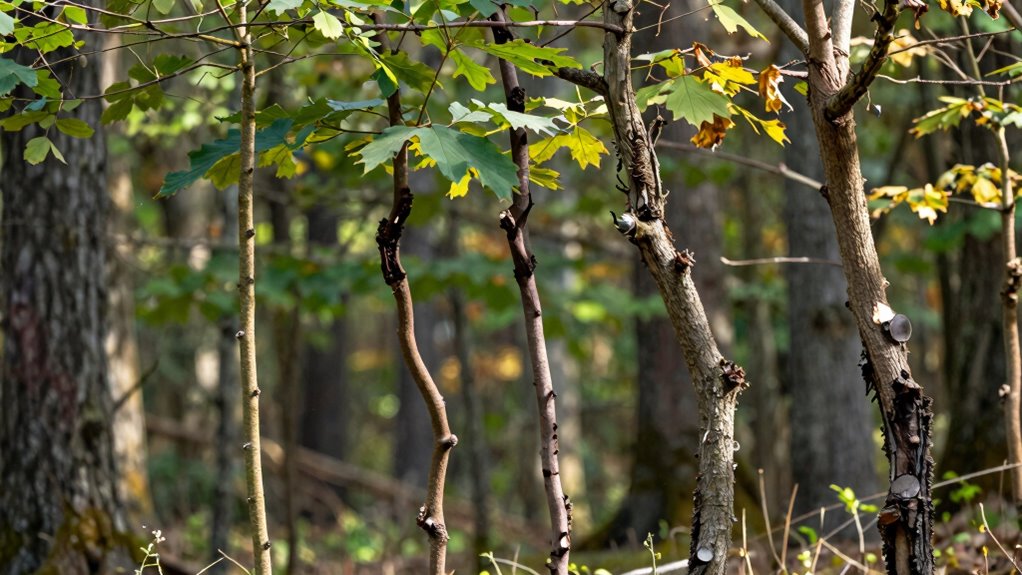

Deer pressure gradually changes plant shapes by favoring shorter, denser, and more resistant growth forms. As deer browse mainly between knee and shoulder height, they clip branches, leaves, and shoots, preventing plants from growing tall or spreading wide. Over time, plants adapt by becoming thicker, tougher, and more compact, often forming dense clusters. If you keep exploring, you’ll discover how these changes influence entire ecosystems and plant diversity.

Get garden gear delivered free with Prime
- Fast, free delivery on millions of items
- Prime Video, Amazon Music and more included
- Member-only deals all year
Key Takeaways
- Deer browsing limits plant height by clipping branches and shoots, resulting in shorter, bushier growth forms.
- Repeated feeding at certain heights prevents plants from developing tall or spreading structures.
- Plants adapt by becoming denser, developing tough leaves, or growing closer to the ground for protection.
- Long-term deer pressure shifts plant communities toward low-growing, browse-resistant species.
- Overall, deer browsing shapes plant forms into compact, shrub-like structures over time.
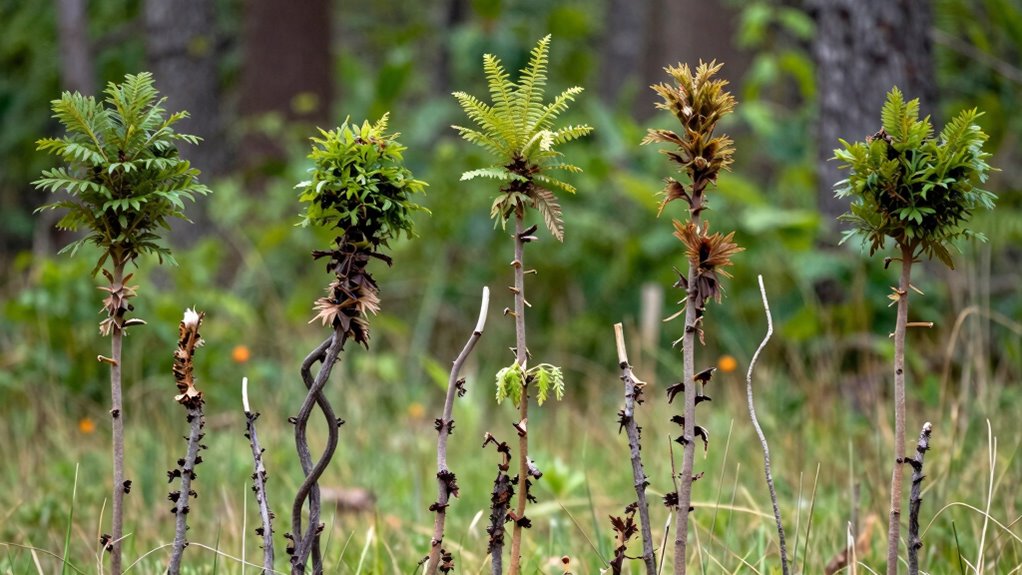
Deer pressure can profoundly alter the shape and growth patterns of plants in their habitats. When deer frequent an area, their feeding habits play a vital role in shaping the plant life around them. They tend to prefer certain plants over others, often targeting the most nutritious or accessible ones. As they browse, they clip branches, leaves, and shoots, which directly influences the growth form of the plants they consume. Over time, this selective feeding results in dwarfed bushes, stunted saplings, and plants that grow in unusual, often more compact forms. Instead of tall, spreading plants, you’ll notice many species adapting by becoming shorter and bushier, which is a direct response to the pressure exerted by these herbivores. This selective feeding can lead to a significant reduction in the overall height and natural form of affected plants. Your plants’ growth habits are not only affected by what deer feed on but also by how they feed. Deer tend to browse at specific heights—often between knee and shoulder level—so plants within this zone are most impacted. This repeated trimming prevents many trees and shrubs from reaching their natural heights, forcing them into more shrub-like shapes. As a result, the overall structure of plant communities shifts, favoring species that can withstand or escape deer browsing. Some plants develop thicker bark, more thorny or tough leaves, or grow in dense clusters to deter the animals, which in turn alters the plant diversity of the area. You might see a reduction in the variety of tall, woody plants and an increase in ground cover or low-growing species because the taller ones are repeatedly eaten back. This ongoing pressure can cause long-term changes in the landscape. As certain plants are repeatedly eaten and others flourish, the entire ecosystem’s composition shifts. Some species become dominant, while others decline or disappear altogether. The impact on plant diversity is significant because it influences which plants can survive and reproduce over time. If deer continue to browse heavily, you could see a homogenized plant community, with fewer species capable of withstanding the intense feeding pressure. This, in turn, affects other wildlife that depends on a diverse plant palette for food and shelter. Over time, the shape and structure of plants evolve in response to deer pressure, illustrating how these animals are powerful agents of change within their habitats. Additionally, plant adaptation mechanisms play a crucial role in how different species survive under such intense browsing. These adaptations can include changes in leaf toughness, growth patterns, or reproductive strategies to cope with ongoing herbivory pressure.
As an affiliate, we earn on qualifying purchases.
Frequently Asked Questions
How Quickly Do Plants Adapt Their Shape Under Deer Pressure?
Plants adapt their shape relatively quickly under deer pressure, often within a single growing season. You’ll notice plant growth suppression as they develop morphological adaptations like shorter stems or thornier surfaces. These changes help deter deer from feeding, and over time, the plants become more resistant. The speed of adaptation depends on the severity of pressure and the plant species, but generally, noticeable changes occur fairly rapidly to guarantee survival.
Are Some Plant Species More Resistant to Deer Browsing Than Others?
Some plant species, surprisingly, are more resistant to deer browsing than others. You’ll notice that plants with strong plant defense mechanisms and high browsing resilience tend to survive better. Like a wisecracking guard dog, these plants shrug off deer attacks, showcasing natural resilience. So, if you want to protect your garden, choose species with proven plant defense traits, because nature’s got some clever ways of fighting back against those pesky deer.
Does Plant Shape Change Affect Other Wildlife in the Area?
Yes, plant shape changes can impact other wildlife by altering deer habitat and plant diversity. When deer browse selectively, they shape plant growth, which influences the availability of food and shelter for various species. As certain plants become more dominant or suppressed, it can reduce plant diversity, affecting animals that rely on specific plants for food and cover. These changes ripple through the ecosystem, impacting overall wildlife health and habitat stability.
Can Deer Pressure Lead to Loss of Certain Plant Populations?
Imagine a garden where deer are picky eaters, favoring certain plants over others. Because of their selective deer diet preferences, some plant populations struggle to regenerate, risking local loss. When deer heavily browse specific species, the plants can’t recover fast enough, leading to a decline or disappearance. Over time, this selective pressure shapes forest composition, making it essential to manage deer populations to preserve diverse plant communities.
How Does Deer Pressure Vary Across Different Seasons?
Deer pressure varies with seasons due to deer migration and seasonal plant growth. In spring and summer, when plants thrive, deer tend to browse more, impacting plant development and shape. During fall and winter, deer migrate or reduce activity, leading to less pressure on plants. This seasonal fluctuation influences how plants grow and adapt, with less browsing in colder months allowing some species to recover and grow more freely.
dense thorny bushes for wildlife
As an affiliate, we earn on qualifying purchases.
As an affiliate, we earn on qualifying purchases.
Conclusion
Imagine a young sapling standing tall, only to be nibbled down year after year by deer. Over time, it adapts, growing thicker, lower, and more twisted to survive. Just like that resilient plant, ecosystems change under pressure, shaping their future in unexpected ways. Deer may seem small, but their influence rewrites the story of plant growth—showing how nature’s quiet battles craft the landscape we see today.
ground cover plants for deer resistance
As an affiliate, we earn on qualifying purchases.
As an affiliate, we earn on qualifying purchases.
As an affiliate, we earn on qualifying purchases.
Halloween Picks
halloween
As an affiliate, we earn on qualifying purchases.