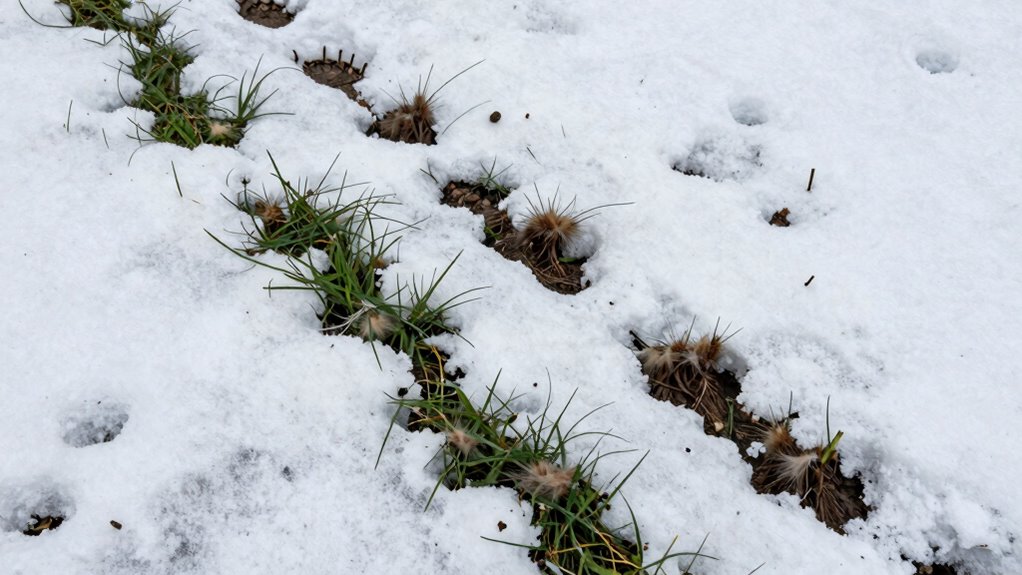

If you notice rabbit damage in winter, it shows your yard is a key refuge for wildlife when natural food is scarce. Gnawed stems, shredded bark, and missing foliage indicate heavy browsing, especially on tender plants and exposed roots. This pressure often peaks when ground cover thins or snow melts, revealing how much the rabbits rely on your yard for shelter and nourishment. To better protect your plants and understand wildlife habits, explore more about winter yard dynamics.

Get garden gear delivered free with Prime
- Fast, free delivery on millions of items
- Prime Video, Amazon Music and more included
- Member-only deals all year
Key Takeaways
- Heavy rabbit browsing indicates the yard provides essential winter shelter and food sources.
- Increased damage during winter reflects higher local rabbit activity due to scarce natural forage.
- Preference for tender, young plants shows rabbits target accessible, nutritious vegetation during harsh months.
- Persistent damage suggests the yard is a critical refuge, highlighting the need for wildlife-friendly management.
- Seasonal damage patterns help identify vulnerable plants and inform protective landscape strategies.
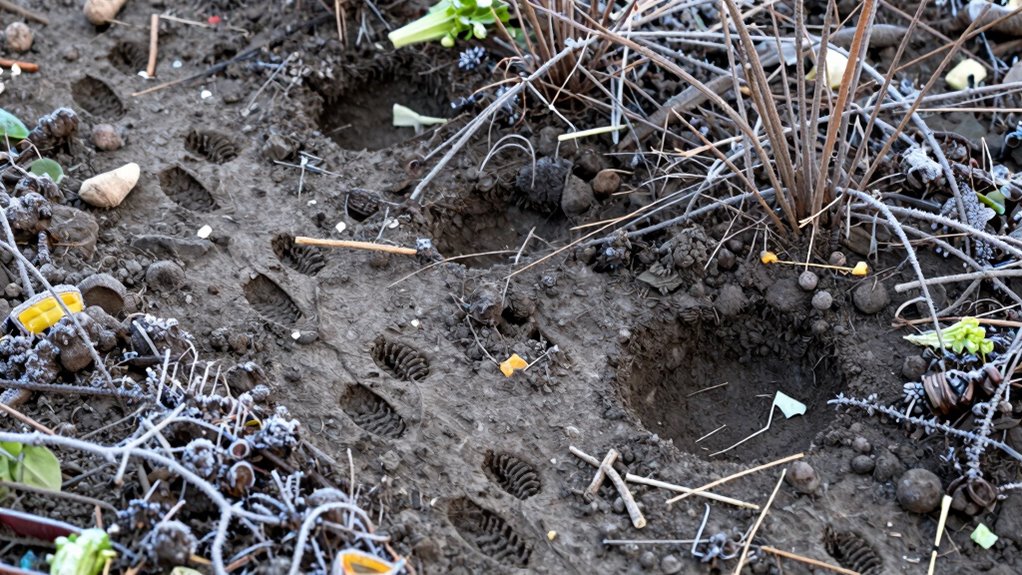
As winter approaches, your yard faces increased pressure from rabbits seeking food and shelter, often leading to noticeable damage to plants and landscaping. Observing this damage offers insight into wildlife behavior and how seasonal plant growth influences animal activity. During colder months, rabbits become more active in your yard because natural food sources are scarcer. They tend to focus on tender, young plants that are easier to chew, especially in areas where the ground cover has thinned or snow has melted, exposing roots and tender shoots. These behaviors reveal how wildlife adapts to seasonal changes, relying more heavily on available resources in your yard as their natural habitat becomes less hospitable.
Winter increases rabbit activity, leading to plant damage as they seek tender, exposed shoots and roots.
When you see gnawed stems, shredded bark, or missing foliage, it indicates that rabbits are actively foraging nearby. Such signs highlight the importance of understanding seasonal plant growth patterns. In spring and early summer, plants typically grow vigorously, and damage might be less noticeable or less severe because rabbits have abundant natural options. However, as winter sets in, their browsing intensifies on the most accessible and nutritious plants, often leading to more significant damage. This pattern suggests that during colder months, your yard’s flora becomes less resilient against browsing, and you might see fewer plants thriving or regenerating after winter’s toll. Recognizing how seasonal plant growth influences animal activity can help you better prepare your landscape.
The damage also reflects how wildlife behavior shifts with changing seasons. Rabbits tend to establish territories close to their food sources, which means your yard may inadvertently become a critical winter refuge. Their activity isn’t random; it’s driven by the need to survive during harsher conditions. If you notice persistent damage, it’s a sign that your yard provides valuable shelter and nourishment, making it a hub for local wildlife during winter. This behavior underscores the importance of managing your landscape thoughtfully, whether to protect plants or to coexist with the animals. Additionally, paying attention to native plant species can help you select more resilient options that withstand winter browsing better.
Furthermore, examining how your plants respond to winter browsing can give you clues about what types of vegetation are most vulnerable and how seasonal plant growth cycles influence animal activity. Young, tender shoots are always favorites, especially when other food sources are unavailable. Recognizing these patterns can help you plan your planting strategy, perhaps by choosing more resilient plants or installing barriers during peak browsing times. Additionally, understanding wildlife behavior and its seasonal patterns can help you develop strategies that balance plant health and wildlife coexistence. Ultimately, the damage tells a story—one of adaptation, survival, and the interconnectedness of your yard’s ecosystem during winter.
wildlife protective plant fencing
As an affiliate, we earn on qualifying purchases.
As an affiliate, we earn on qualifying purchases.
Frequently Asked Questions
How Can I Identify Rabbit Damage From Other Pests?
To identify rabbit damage from other pests, look for fresh, clean-cut edges on plants and shallow gnaw marks, typical of rabbits. Differentiating damage sources involves noting the pattern; rabbits often chew on bark and stems near the ground, creating irregular, jagged edges. Unlike insects or rodents, rabbit damage usually appears in clusters around garden perimeters, making it easier to recognize through careful inspection of the plant and surrounding area.
What Are the Best Preventive Measures Against Rabbit Damage?
To prevent rabbit damage, you should install sturdy garden fencing that extends at least 2 feet high and bury it 6 inches underground to block burrowing. Use natural repellents, like planting garlic, marigolds, or using commercially available sprays, to deter rabbits without harming your plants. Regularly inspect your garden for signs of damage, and reinforce barriers as needed to keep rabbits out and protect your yard during winter.
Does Rabbit Damage Impact Overall Yard Health?
Yes, rabbit damage impacts overall yard health by disrupting the natural balance during winter. Winter rabbit behavior leads them to feed on plants, which can weaken or kill native vegetation. This disturbance affects the yard’s ecological balance, reducing biodiversity and encouraging invasive species. As a result, your yard may become less resilient, making it harder to maintain healthy, thriving plants and creating an environment less supportive of beneficial wildlife.
When Is the Peak Time for Rabbit Activity in Winter?
You’ll notice peak rabbit activity during late winter, especially when they follow specific winter burrow patterns. Look for signs like fresh droppings, nibbled stems, and disturbed soil around burrow entrances. These activity signs increase after snowfalls, as rabbits emerge to forage. Tracking these signs helps you identify their busiest times, allowing you to implement effective deterrents and protect your plants during their most active winter period.
Are There Humane Ways to Deter Rabbits From My Yard?
Yes, you can humane deterring rabbits from your yard by using natural repellents like garlic or hot pepper spray, which they dislike. Additionally, habitat modification helps; remove brush piles and dense vegetation that provide cover. You might also install fencing, but guarantee it’s buried to prevent burrowing. These methods make your yard less inviting without harming the rabbits, encouraging them to seek safer areas elsewhere.
As an affiliate, we earn on qualifying purchases.
Conclusion
By paying attention to rabbit damage, you can gauge the pressure your yard faces during winter. Imagine noticing gnawed bark on your fruit trees—that’s a sign rabbits are seeking food and shelter. If you act quickly, installing barriers or repellents, you can protect your yard from further harm. Just like Sarah did last winter, who used fencing to keep rabbits at bay, you can reduce damage and keep your yard healthy despite the winter pressures.
As an affiliate, we earn on qualifying purchases.
native resilient plants for winter
As an affiliate, we earn on qualifying purchases.
As an affiliate, we earn on qualifying purchases.
Halloween Picks
halloween
As an affiliate, we earn on qualifying purchases.