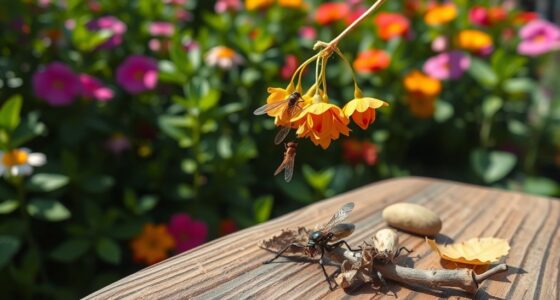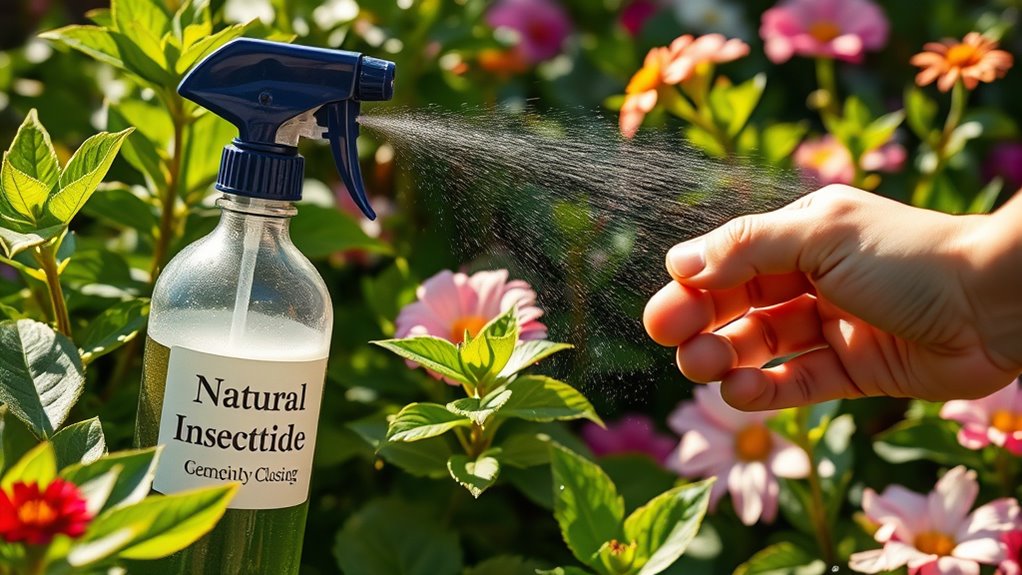

To create a simple DIY soap spray, mix 1-2 tablespoons of mild liquid soap with a quart of water, then shake well. Spray directly on soft-bodied pests like aphids, focusing on undersides of leaves and affected areas. Apply early morning or late evening to avoid leaf scorching. Repeat every few days until pests diminish. For more tips on effective and eco-friendly pest control, keep exploring this natural solution.
Key Takeaways
- Mix 1-2 tablespoons of mild liquid soap with 1 quart of water for a safe, homemade insecticide.
- Spray directly on affected plants, focusing on undersides of leaves, during early morning or late evening.
- Effective against soft-bodied pests like aphids, mites, and whiteflies; reapply every few days as needed.
- Conduct a spot test before full application to prevent plant damage; avoid soaps with degreasers or fragrances.
- Promotes organic gardening by reducing chemical use and supporting sustainable pest management practices.
Are you tired of using chemical insecticides that harm the environment and your health? If so, it’s time to explore natural alternatives like soap sprays. These homemade pest control solutions are simple, effective, and safe for your garden, family, and the planet. Soap sprays work by suffocating pests such as aphids, spider mites, and whiteflies, making them a popular choice for organic gardeners. Plus, you don’t need to buy expensive commercial products—just a few household ingredients and some basic garden spray techniques can do the trick.
Discover natural, effective soap sprays for pest control that protect your garden and health.
To start with, making your own soap spray is straightforward. You’ll need a mild liquid soap—preferably pure castile soap or a similar gentle soap that doesn’t contain degreasers or added fragrances. Mix about one to two tablespoons of soap with a quart of water. Shake or stir the mixture well to ensure the soap dissolves completely. Before applying it broadly, always do a spot test on a small part of your plants to check for any adverse reactions, especially if your plants are delicate or newly planted.
Once you’ve confirmed the soap spray is safe for your plants, it’s time to use your garden spray techniques. Fill a spray bottle or garden sprayer with the soap solution. Spray directly onto affected plants, focusing on the undersides of leaves where pests tend to hide. Cover all surfaces thoroughly, but avoid saturating the soil. It’s best to apply early in the morning or late in the evening when the sun isn’t intense, which helps prevent leaf scorching and allows the soap to stick better.
Consistency is key for homemade pest control. Apply the soap spray every few days during peak pest activity, and continue for a week or two to ensure the pests are eradicated. Remember, soap sprays are most effective against soft-bodied insects like aphids and mites. If pests persist, you might need to combine soap sprays with other natural methods, such as introducing beneficial insects or using neem oil.
Using soap sprays not only keeps your garden free of harmful chemicals but also teaches you how to use simple garden spray techniques effectively. You gain control over pest problems without risking your plants’ health or polluting the environment. Over time, you’ll develop a better understanding of which pests are present and how to target them precisely. This approach makes your gardening experience more sustainable and rewarding, giving you a healthy, thriving garden that’s free of chemical residues.
Additionally, understanding the importance of integrated pest management can help you develop a comprehensive approach to pest control that minimizes chemical use and promotes garden health.
Frequently Asked Questions
How Often Should I Reapply Soap Sprays?
You should reapply soap sprays every 7 to 10 days to maintain effectiveness. The frequency of application depends on weather conditions; hot, windy days may require more frequent spraying, while after rain, you should reapply once the foliage dries. Keep an eye on pest activity, and reapply as needed, but avoid over-spraying, which can harm your plants. Regular reapplication helps keep pests at bay and your garden healthy.
Are Soap Sprays Safe for All Garden Plants?
Are soap sprays safe for all your garden plants? Absolutely, but beware—some plants are super sensitive, like delicate orchids or ferns, and might react badly. Always check plant compatibility before spraying to avoid mishaps. Soap sprays are generally safe and chemical-free, making them a smart choice for eco-conscious gardeners. Just test on a small area first, and you’ll protect your garden while keeping pests at bay!
Can Soap Sprays Kill Beneficial Insects?
You might wonder if soap sprays kill beneficial insects. While soap sprays are generally safe when used properly, they can harm beneficial insects like bees and ladybugs if applied excessively or during active hours. For beneficial insect safety, avoid spraying during bloom times or when pollinators are active. Consider soap spray alternatives, such as neem oil or biological controls, to protect your helpful garden allies while managing pests effectively.
What Ingredients Are Best for Homemade Soap Sprays?
When making homemade soap sprays, you want natural ingredient options like pure castile soap or gentle dish soap. A common soap mixture ratio is one tablespoon of soap per gallon of water, ensuring it’s effective yet safe for plants. Avoid harsh chemicals, and test the spray on a small area first. Using these natural ingredients and proper ratios helps you create a safe, eco-friendly insecticide for your garden.
How Do I Store Leftover Soap Spray Solution?
Think of your leftover soap spray as a wise old traveler with stories to tell. To keep it lively, store it in a cool, dark place, like a cozy backpack, and use airtight containers. Follow proper storage tips to extend its shelf life, so it’s ready when you need it. Usually, your spray stays good for about a week—beyond that, its effectiveness may fade, so use it promptly.
Conclusion
With soap sprays, you gain a gentle yet effective tool to protect your garden, balancing nature’s delicate harmony with your desire for a pest-free space. While these natural solutions may lack harsh chemicals, they demand your attention and consistency. In tending to your plants, you find that strength lies not in brute force but in careful stewardship—an act of patience that transforms your garden into a thriving, resilient haven.