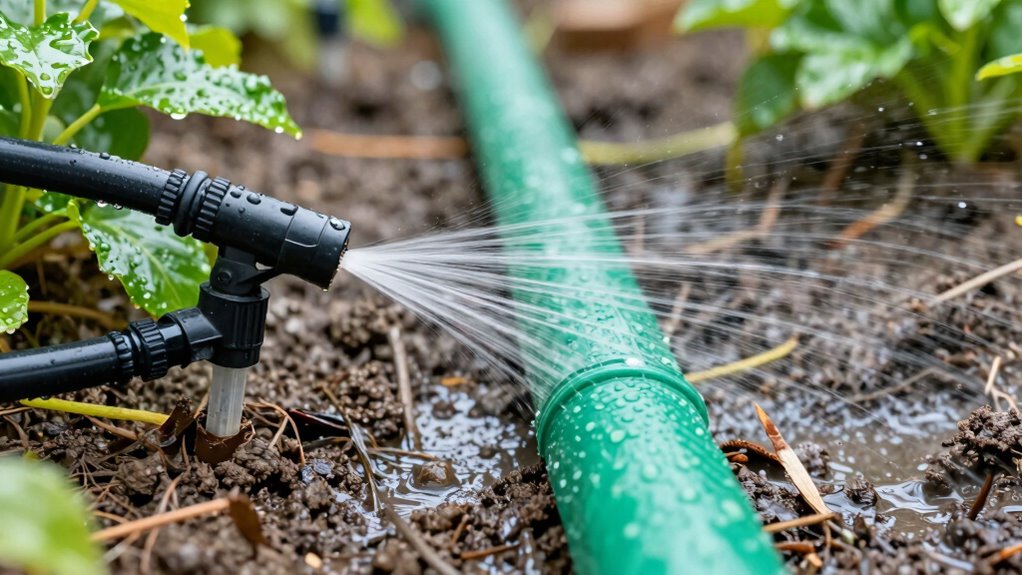
If you want water to be distributed evenly across a large area, a soaker hose is your best choice, as its porous design lets water seep uniformly along its entire length. Drip hoses deliver water more precisely directly to plant roots, making them ideal for targeted watering in vegetable beds or containers. To discover the best option for your garden’s layout and needs, check out more details on how each system performs.

Get garden gear delivered free — and shop member deals
- Fast, free delivery on millions of items
- Access to Prime Big Deal Days deals on October 6–7
- Prime Video, Amazon Music and more included
Key Takeaways
- Drip hoses deliver water directly to plant roots, ensuring precise and even watering for individual plants.
- Soaker hoses distribute water uniformly along their entire length, suitable for broad area coverage.
- Proper pressure regulation in drip systems enhances even water flow and prevents uneven watering.
- Soaker hoses can cause uneven watering if pressure varies along their length, leading to inconsistent moisture.
- Overall, drip hoses tend to water more evenly at specific points, while soaker hoses provide more uniform coverage over large areas.
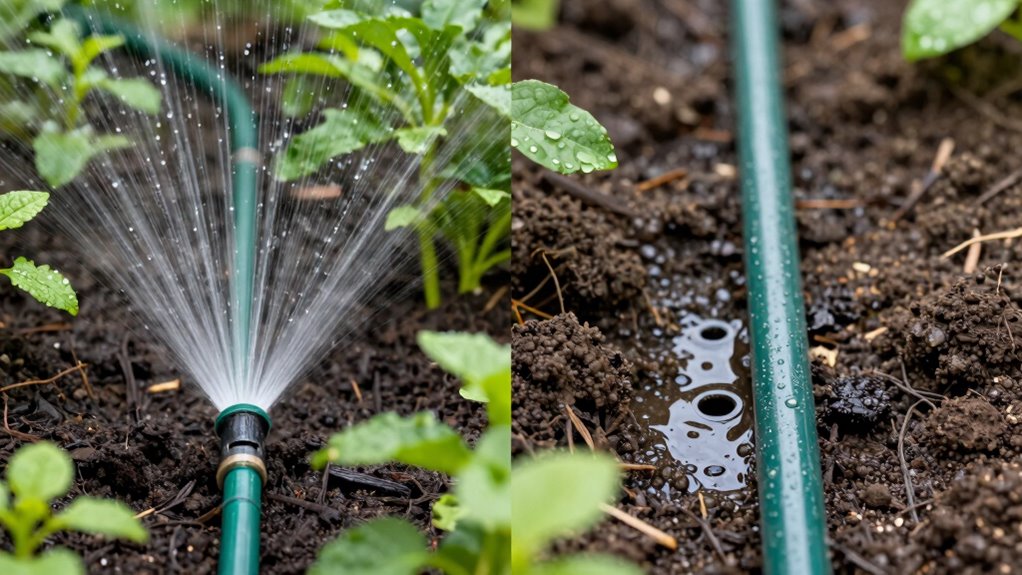
When choosing a watering system for your garden, understanding the differences between drip hoses and soaker hoses can help you make an informed decision. Both options are popular for their ability to deliver water directly to plant roots, promoting garden sustainability and enhancing watering efficiency. However, they function differently and are suited for different garden setups. Drip hoses consist of small perforations or emitters spaced along a flexible tube, allowing water to drip slowly and precisely at each plant’s base. This targeted delivery minimizes waste, reduces runoff, and prevents overwatering, making it ideal for vegetable beds, flower borders, and container gardens. You control the flow rate, and because water is applied directly where needed, you conserve water and support sustainable gardening practices. Additionally, watering system efficiency is improved when the system is properly maintained and adjusted to your garden’s specific needs. Proper installation, including correct placement and pressure regulation, can further enhance watering uniformity. Soaker hoses, on the other hand, are porous hoses that evenly seep water along their entire length. They’re usually made of rubber or recycled plastic and are often used for watering larger garden beds or lawns. Their design allows water to distribute uniformly along the length, which can be especially useful when you need to cover a broad area. While they’re effective for maintaining consistent soil moisture, they may not be as precise as drip systems, particularly in garden layouts with diverse plant types requiring different watering needs. Their ease of use makes them popular among gardeners seeking a simple, straightforward watering method, but they can sometimes lead to overwatering if not monitored carefully. In terms of garden sustainability, both systems help reduce water waste compared to traditional spray sprinklers, but drip hoses generally offer better watering efficiency. Because drip systems deliver water directly to the roots, you’re less likely to lose moisture through evaporation or runoff. This targeted approach means you use less water overall, supporting environmentally friendly gardening. Conversely, soaker hoses can be less efficient if they’re not properly laid out or if water seeps into the soil unevenly due to irregular pressure. They’re best suited for larger planting areas where uniform watering is sufficient and precise control isn’t as critical. Choosing between the two depends on your garden’s size, plant types, and watering needs. If you want precise control, conserve water, and promote sustainability, a drip system might be your best bet. If you have a large garden bed and prefer a simple, broad coverage method, a soaker hose could do the trick. Both options, when used correctly, improve watering efficiency and help create a healthier, more sustainable garden environment. Proper installation and regular system checks can significantly enhance watering system performance, ensuring your garden receives consistent and efficient watering.
best soaker hoses for large garden beds
As an affiliate, we earn on qualifying purchases.
As an affiliate, we earn on qualifying purchases.
Frequently Asked Questions
Can Drip and Soaker Hoses Be Used Together Effectively?
Yes, you can use drip and soaker hoses together effectively. Just check hose compatibility to guarantee they connect properly and maintain consistent watering efficiency. Combining these hoses allows you to target different garden areas more precisely, improving overall watering. Make certain the pressure and flow rates are balanced to prevent over or under-watering. With proper setup, using both hoses together can optimize watering and boost your garden’s health.
Which Hose Type Is More Suitable for Sandy Soils?
Think of sandy soil as a thirsty traveler, keen to soak up every drop. A drip hose is your best ally, delivering water slowly and precisely, allowing the soil to absorb moisture steadily. Its gentle flow prevents runoff and ensures deep water penetration. A soaker hose may flood the surface, wasting water. For sandy soil, a drip hose ensures efficient water absorption, keeping your plants hydrated without waste.
How Long Do Drip and Soaker Hoses Typically Last?
You can expect drip and soaker hoses to last around 3 to 5 years, depending on water pressure and hose material. Higher water pressure can cause wear and tear, reducing lifespan. Durable materials like reinforced rubber or heavy-duty plastic tend to last longer, resisting cracking and leaks. Regular maintenance, such as flushing out debris and checking for leaks, also helps extend your hose’s life, ensuring even watering over time.
Are There Specific Plants That Benefit More From One Hose Type?
Certain plants benefit more from specific watering methods. For example, delicate seedlings or plants with sensitive roots do better with precision plant-specific watering, which drip hoses provide. Hardy shrubs and flower beds often thrive with soaker hoses, especially if the hose material is compatible with their moisture needs. Always consider hose material compatibility to avoid damage, ensuring efficient watering tailored to each plant’s requirements.
Do Drip and Soaker Hoses Require Different Maintenance Routines?
Yes, drip and soaker hoses require different maintenance routines to guarantee ideal watering efficiency. With drip hoses, you should regularly check hose material for clogs or leaks, clean emitters, and flush the system annually. Soaker hoses need inspection for cracks or blockages and should be drained and stored properly during winter. Both types benefit from flushing to prevent buildup, but their maintenance routines vary based on their specific design and material.
adjustable drip irrigation hoses
As an affiliate, we earn on qualifying purchases.
As an affiliate, we earn on qualifying purchases.
Conclusion
So, whether you’re a drip devotee or a soaker skeptic, just remember: your garden’s fate hangs in the balance—will it thrive or drown in a flood of uneven watering? Choose wisely, or risk turning your lush paradise into a soggy swamp, complete with drowned plants and a soggy wallet. After all, nothing says “garden guru” like watching your plants argue over who got the most water—spoiler: it’s never the ones you wanted to thrive.
garden watering system for vegetable beds
As an affiliate, we earn on qualifying purchases.
As an affiliate, we earn on qualifying purchases.
As an affiliate, we earn on qualifying purchases.
Fall Picks
fall essentials
As an affiliate, we earn on qualifying purchases.