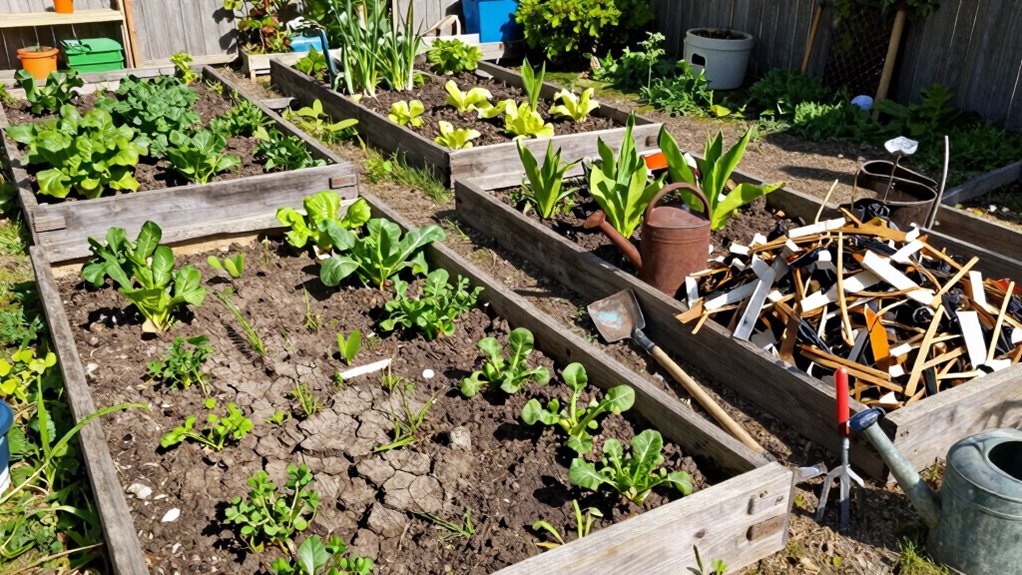
Crop rotation in tiny gardens often fails because limited space makes it hard to plan diverse plantings and break pest cycles effectively. Repeated planting in the same spot depletes soil nutrients and encourages pests to thrive. To fix this, diversify your crops, use pest-resistant varieties, and incorporate companion planting. Regular soil amendments and monitoring help improve soil health and pest control. Keep exploring these strategies to unleash your garden’s full potential.

Get garden gear delivered free — and shop member deals
- Fast, free delivery on millions of items
- Access to Prime Big Deal Days deals on October 6–7
- Prime Video, Amazon Music and more included
Key Takeaways
- Limited space restricts effective crop diversity and proper rotation planning.
- Repeated planting in small areas depletes soil nutrients and weakens plant health.
- Pests can quickly multiply due to confined space, undermining rotation efforts.
- Poor soil health from inadequate amendments hampers crop growth and pest resistance.
- Inconsistent timing and insufficient crop variety hinder breaking pest cycles and nutrient depletion.
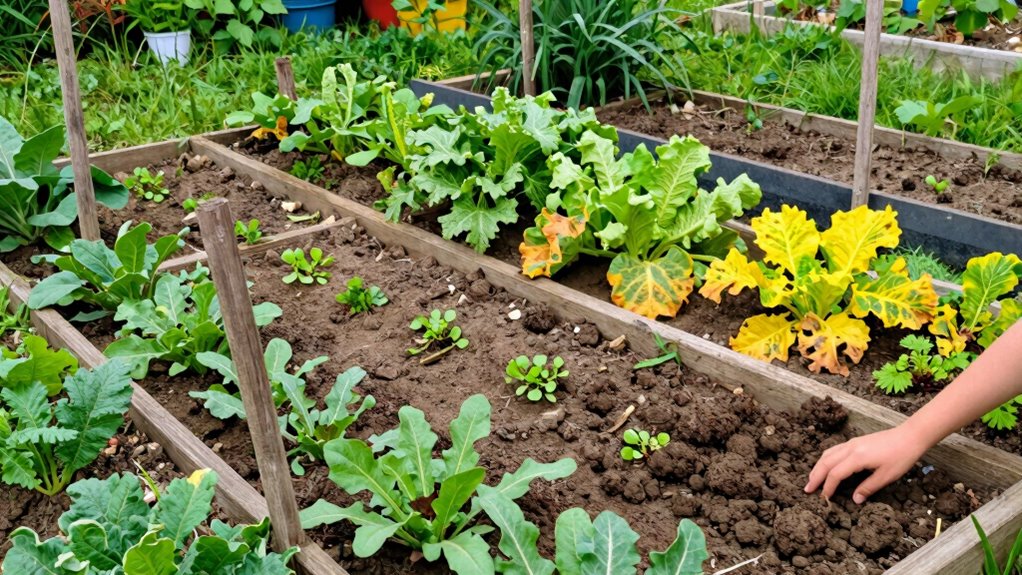
Ever wondered how to keep your tiny garden healthy and productive without overloading the soil? If you’re relying on crop rotation, you might have noticed that it doesn’t always work as planned. In small spaces, crop rotation can be tricky because the limited area complicates proper planning and implementation. One common reason it fails is because of poor soil health. When you plant the same crops repeatedly in the same spot, nutrients get depleted, and the soil becomes less fertile. This leads to weaker plants and lower yields, even if you switch crops each season. To fix this, you need to focus on maintaining soil health by adding organic matter like compost or mulch regularly. This process helps replenish nutrients naturally, making your soil more resilient and less prone to pest problems. Healthy soil supports strong plants that can resist pests better, reducing the need for chemical interventions and creating a more sustainable garden. Additionally, understanding soil testing can help you tailor your amendments more effectively to your garden’s specific needs. Proper soil management is essential for maximizing tiny garden productivity and preventing crop failure. Regularly monitoring soil nutrient levels also allows you to adjust your fertilization strategies proactively. Implementing crop rotation with a clear plan is vital to avoid nutrient depletion and pest buildup over time.
Another factor that hampers crop rotation in tiny gardens is ineffective pest management. Pests tend to build up in small spaces because they have limited areas to escape or hide. When you plant the same crop repeatedly or rotate without considering pests’ life cycles, pests can become resistant or multiply quickly. This can cause infestations that damage your plants despite your best efforts. To address this, you need to diversify your plantings and incorporate pest-resistant varieties. Companion planting is also effective—pair your vegetables with herbs or flowers that repel pests. Additionally, practicing crop rotation strategically by changing crop families can break pest cycles and reduce their populations naturally. This way, pests don’t get a foothold, and your plants stay healthier longer. Incorporating soil amendments can further improve soil resilience against pests and promote healthy root development, making pest control more effective. Being aware of pest life cycles can also help you time your plantings and interventions more effectively to prevent infestations.
organic soil amendments for vegetable gardens
As an affiliate, we earn on qualifying purchases.
As an affiliate, we earn on qualifying purchases.
Frequently Asked Questions
How Often Should I Rotate Crops in a Small Garden?
You should rotate crops in your small garden every planting season to prevent soil depletion and reduce pests. Incorporate companion planting to enhance pest management naturally, which complements crop rotation. By changing plant locations annually, you disrupt pest cycles and improve soil health. Keep track of what you plant and plan rotations accordingly, ensuring your garden stays productive and healthy while minimizing pest problems.
Can I Use Container Plants for Crop Rotation?
Think of container plants as your garden’s puzzle pieces—you can move them around easily. Yes, you can use container plants for crop rotation, which helps break pest cycles and improves soil health. Incorporate companion planting in each container to boost pest management naturally. Rotating your plants within containers keeps pests at bay and maintains soil resilience, making your tiny garden a thriving, balanced ecosystem.
What Are Quick-Growing Crops Suitable for Rotation?
You can use quick-growing crops like radishes, lettuce, and spinach for rotation. These crops mature fast, giving you multiple harvests in a season. Incorporate companion planting to enhance pest management and improve soil health. By rotating these quick crops, you prevent soil depletion and reduce pest buildup. This strategy keeps your tiny garden productive and healthy, ensuring continuous yields while maintaining effective pest control and nurturing beneficial plant relationships.
How Do I Track My Crop Rotation Schedule Effectively?
Ever wonder how to keep your tiny garden thriving and organized? You should use a garden journal or digital app to track your crop rotation schedule. Record planting dates, crops, and companion planting strategies to enhance pest management. Do you notice patterns or pest issues? Adjust your plan accordingly. Staying consistent with your records helps prevent crop failure, guarantees healthy soil, and keeps pests at bay—making your garden flourish.
Are There Specific Soil Amendments to Enhance Rotation Success?
To enhance rotation success, incorporate soil amendments that boost organic matter and soil mineralization. Use compost or well-rotted manure to improve soil structure and nutrient content, promoting healthy plant growth. Additionally, add mineral-rich amendments like rock phosphate or kelp meal to replenish essential nutrients and encourage microbial activity. These steps help maintain soil fertility, prevent nutrient depletion, and support effective crop rotation, especially in tiny gardens where soil health is vital.
As an affiliate, we earn on qualifying purchases.
Conclusion
Just like the wise gardener who learns from the ancient scrolls of farming, remember that even in tiny gardens, your efforts can flourish with a bit of strategy. Crop rotation may seem tricky, but with patience and planning, you’ll turn your small patch into a thriving oasis. Think of it as planting the seeds for your own personal Eden—where each season’s change brings new life and bountiful harvests, echoing the timeless dance of nature’s cycles.
companion planting kits for small gardens
As an affiliate, we earn on qualifying purchases.
As an affiliate, we earn on qualifying purchases.
soil testing kits for garden nutrients
As an affiliate, we earn on qualifying purchases.
As an affiliate, we earn on qualifying purchases.
Fall Picks
fall essentials
As an affiliate, we earn on qualifying purchases.