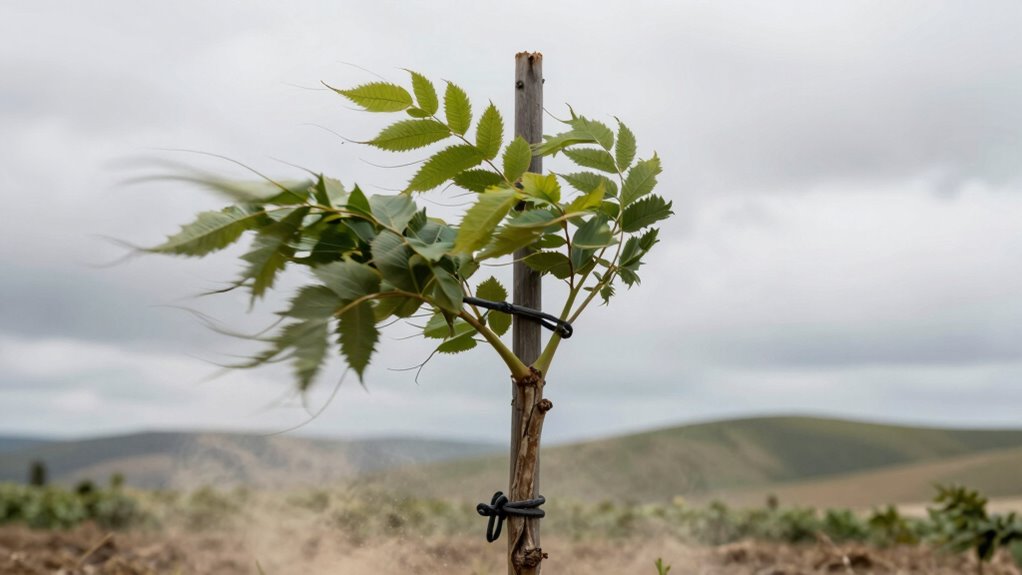

To plant successfully in windy sites, start by creating windbreaks like bunds or planting trees nearby to shield young plants. Prepare soil with organic matter, and use mulch to protect soil and retain moisture. Plant in clusters or groups for added stability, and stake taller plants until they establish strong roots. Installing erosion barriers and choosing wind-resistant species also helps. Keep soil moist and monitor growth, and you’ll find ways to boost your plants’ resilience as you continue this process.

Get garden gear delivered free — and shop member deals
- Fast, free delivery on millions of items
- Access to Prime Big Deal Days deals on October 6–7
- Prime Video, Amazon Music and more included
Key Takeaways
- Use windbreaks and ground covers to shield plants and reduce wind speed.
- Plant in clusters and support taller plants with staking for stability.
- Prepare soil with organic matter and proper drainage to prevent erosion.
- Mulch with organic material to retain moisture and protect roots.
- Regularly monitor and maintain soil moisture and plant support during initial growth.
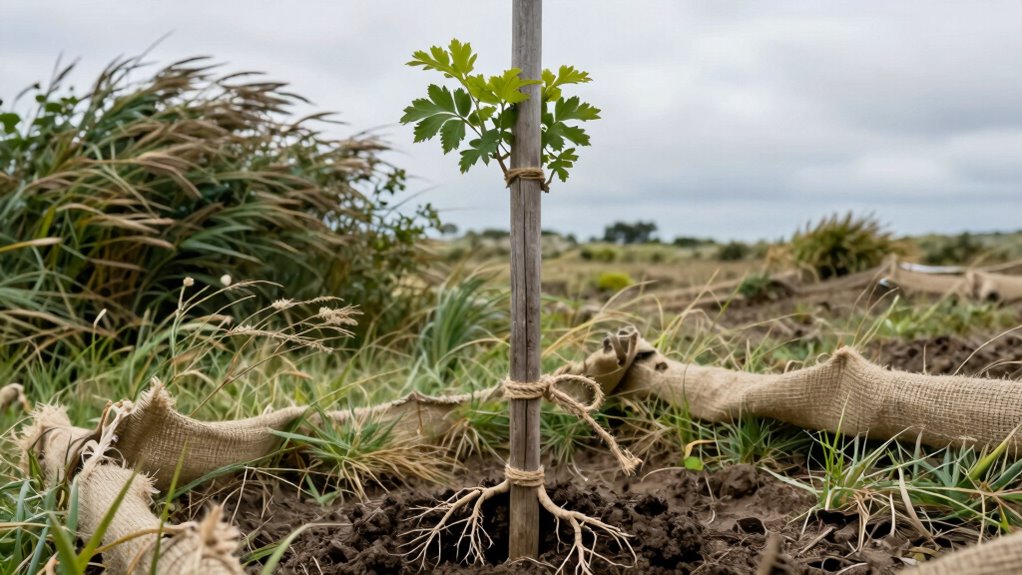
Alongside windbreaks, focus on soil stabilization. Wind can loosen the soil surface, leading to erosion and nutrient loss, which hampers plant growth. To prevent this, incorporate ground covers like creeping juniper, clover, or native grasses that create a protective layer over the soil. Mulching with organic material, such as wood chips or straw, also helps hold soil in place, retains moisture, and moderates temperature fluctuations, all of which promote healthy root development. When preparing planting beds, guarantee the soil is well-drained but retains enough moisture; compacted or loose soil can be more vulnerable to wind erosion. Enrich your soil with organic matter to improve its structure and root anchorage, making it more resistant to displacement. Incorporating soil stabilization techniques can further enhance the resilience of your planting site against wind damage. You should also consider planting techniques that enhance stability. For example, planting in clusters or groups can help reduce wind’s impact on individual plants. Deep planting encourages roots to grow downward and anchor more securely, giving your young plants a better chance of withstanding gusts. Additionally, staking taller plants during their initial growth phase provides extra support until they establish a strong root system. Maintaining soil moisture is also crucial, as consistent watering prevents the soil from drying out and becoming more susceptible to erosion. Proper watering helps young plants develop sturdy stems and roots, making them more resilient over time. Employing soil reinforcement methods, such as installing erosion control fabrics or barriers, can further protect your planting area from wind-related disturbances. Being mindful of plant placement and choosing resistant species can also significantly improve success in windy conditions.
As an affiliate, we earn on qualifying purchases.
Frequently Asked Questions
How Can I Protect Young Plants From Wind Damage During Storms?
To protect your young plants during storms, you should create windbreaks like fences or shrubs to block wind tunnel effects. Use stakes or cages to support the plants, preventing leaf tear damage from strong gusts. Mulch around the base to stabilize the soil and keep roots protected. Regularly check for damage and adjust supports as needed, ensuring your plants stay resilient against harsh winds.
Are There Specific Wind-Resistant Plants Suitable for Windy Locations?
While delicate flowers struggle, wind-tolerant shrubs thrive in windy sites, offering resilience and structure. You should plant wind-resistant options like junipers, barberries, or lilacs, which withstand gusts and reduce wind impact. Incorporate sheltering plants around these tough varieties to create a buffer, enhancing protection. This combination strengthens your garden’s defenses, ensuring young growth remains healthy despite relentless winds.
What Soil Amendments Help Plants Withstand Strong Winds Better?
To help your plants withstand strong winds, you should focus on soil stabilization and use wind resistant mulch. Adding organic matter like compost improves soil structure, making it more resistant to erosion. Applying wind resistant mulch around plants shields roots, reduces wind speed impact, and conserves moisture. These amendments create a stable environment, encouraging healthy growth despite harsh wind conditions, ultimately strengthening your plants’ resilience.
How Often Should I Water Plants in Windy, Dry Conditions?
Think of your plants as delicate sails in a gusty wind—they need steady, mindful care. Water them deeply once or twice a week, adjusting with the watering schedule based on drought tolerance and soil moisture. If the air’s dry and wind-blown, water more often, but always guarantee good drainage to prevent root rot. Consistent watering helps roots grow strong enough to withstand gusts, turning your garden into a resilient fortress.
Can Windbreaks Be Used Effectively for Small Garden Plots?
Yes, windbreaks work well for small garden plots when you use effective windbreak design. You should choose dense, evergreen plants or structures that block wind without taking up too much space. Incorporate small garden strategies like planting in staggered rows or using taller plants at the back. These methods protect young plants from wind damage, reduce moisture loss, and create a more stable environment for your garden’s growth.
As an affiliate, we earn on qualifying purchases.
Conclusion
So, next time you plant in a windy spot, remember that patience and careful planning can turn the odds in your favor. Sometimes, the strongest growth comes from the toughest conditions—like a seed that takes root despite the gusts. With a little extra protection and perseverance, you’ll watch your young plants flourish where others might give up. After all, it’s often those windy days that remind us how resilience can turn challenges into beautiful beginnings.
As an affiliate, we earn on qualifying purchases.
As an affiliate, we earn on qualifying purchases.
Fall yard work Picks
leaf blowers
As an affiliate, we earn on qualifying purchases.