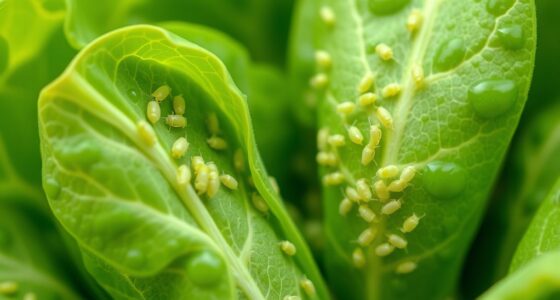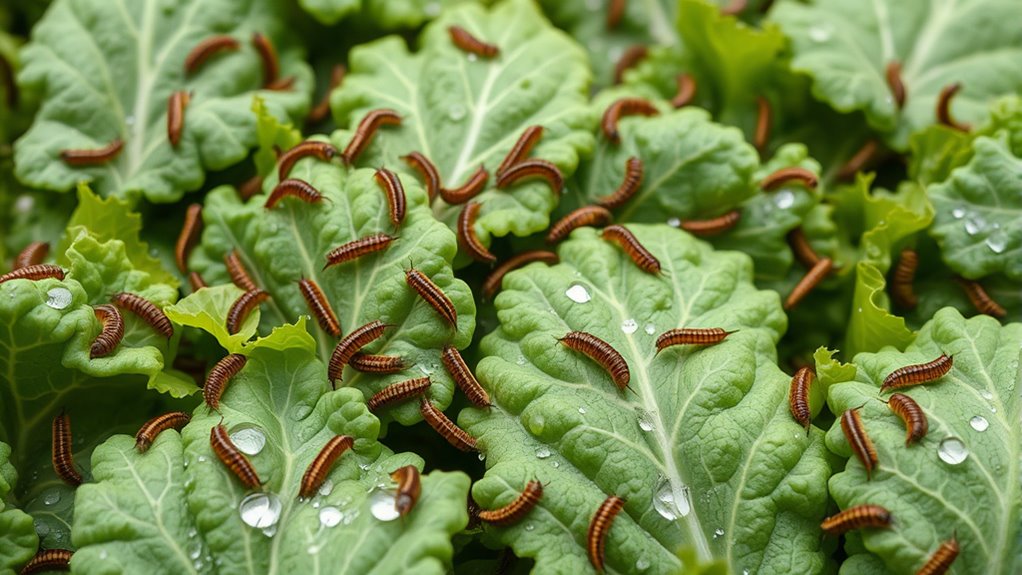

If you’re dealing with armyworms in leafy greens, act quickly to prevent serious damage. These voracious pests can infest crops rapidly, chewed leaves, frass, and caterpillars are good signs to look for. Using an integrated pest management approach, including organic controls like Bacillus thuringiensis and biological predators, helps manage them effectively. Implementing cultural practices such as crop rotation and physical barriers can also reduce their impact. Continue exploring to learn more strategies for staying ahead of these pests.
Key Takeaways
- Early detection through signs like chewed leaves and frass is essential to prevent widespread damage.
- Integrated Pest Management combines biological controls, monitoring, and cultural practices for effective armyworm control.
- Organic methods such as Bacillus thuringiensis, beneficial nematodes, and natural predators effectively target armyworm larvae.
- Understanding armyworm development stages helps time control measures for maximum effectiveness.
- Cultural practices like crop rotation, removing debris, and physical barriers reduce armyworm infestations in leafy greens.

Armyworms can quickly become a major threat to your leafy greens if left unchecked. These voracious pests can devastate entire crops in a short amount of time, making it essential to act swiftly and effectively. An indispensable step in managing armyworm infestations is implementing an integrated pest management (IPM) approach. IPM combines multiple strategies to control pests while minimizing environmental impact, ensuring you protect your greens without relying solely on chemical pesticides. By monitoring pest populations regularly, you can catch infestations early and avoid costly damage. Inspect your plants diligently, especially during peak armyworm activity seasons, and look for signs like chewed leaves, frass, or the presence of caterpillars. Early detection allows you to respond promptly with targeted control methods.
When it comes to organic control methods, you have several options that are both effective and eco-friendly. Biological controls, like introducing natural predators such as parasitic wasps or beneficial nematodes, can help keep armyworm populations in check without harming your plants or the surrounding environment. These natural enemies prey on armyworms, reducing their numbers naturally. Additionally, Bacillus thuringiensis (Bt), a naturally occurring soil bacterium, is a highly effective organic pesticide against caterpillars. When sprayed on your leafy greens, Bt disrupts the digestive system of armyworms, causing them to stop feeding and eventually die. Applying Bt during the early larval stages offers the best control, so timing your applications correctly is essential.
Furthermore, understanding the color patterns and development stages of armyworms can improve your ability to target them effectively, as different stages may require different control strategies. Besides biological controls, cultural practices can also play a role in organic management. Crop rotation, for instance, can disrupt the armyworms’ lifecycle, making it harder for them to establish themselves year after year. Removing plant debris or weeds that serve as alternative hosts can also reduce overwintering sites for eggs and larvae. Covering your crops with row covers or insect netting creates a physical barrier, preventing armyworms from reaching your greens altogether. These methods work synergistically, aligning with the principles of integrated pest management to provide a sustainable, environmentally responsible solution.
Frequently Asked Questions
How Do Armyworms Affect the Nutritional Value of Leafy Greens?
Armyworms damage leafy greens by causing nutritional degradation and micronutrient loss. As they feed, they destroy healthy plant tissue, reducing the greens’ vitamin and mineral content. This damage not only lowers their overall nutritional value but also makes the greens less beneficial for your diet. You might notice a decline in flavor and texture, and the leafy greens become less nutritious, affecting the health benefits you expect from your produce.
Are There Organic Methods to Control Armyworms in Leafy Greens?
They say “an ounce of prevention is worth a pound of cure,” and organic methods can help you control armyworms. You can use companion planting with herbs like basil or marigolds to repel them naturally. Also, introducing biological predators like parasitic wasps or beneficial nematodes can keep armyworm populations in check. These eco-friendly strategies protect your greens without harmful chemicals, keeping your garden healthy and sustainable.
Can Armyworms Transmit Diseases to Other Crops?
Yes, armyworms can transmit diseases to other crops through their feeding activity and movement. As they feed, they may carry pathogens that contaminate your crops, leading to disease transmission. This can cause crop contamination, reducing yield and quality. To protect your crops, monitor armyworm activity closely, implement integrated pest management strategies, and remove infested plants promptly to minimize the risk of disease spread.
What Are the Long-Term Ecological Impacts of Chemical Control?
Think of chemical control impacts as ripples spreading across a pond, gradually shaping the ecosystem’s future. Long-term ecological consequences may include soil degradation, harm to beneficial insects, and disrupted predator-prey relationships. These chemicals can linger, altering biodiversity and resilience. While they offer quick relief, their persistent presence risks creating an unstable environment, ultimately undermining the natural balance you aim to protect. Use them wisely, understanding their lasting ecological footprint.
How Do Climate Changes Influence Armyworm Infestations?
Climate change accelerates armyworm infestations by altering temperature and rainfall patterns, which influence pest migration and survival. Warmer temperatures enable armyworms to expand their range into new areas, increasing outbreaks. You should consider climate adaptation strategies, like monitoring pest migration patterns and implementing timely control measures, to manage infestations effectively. Staying vigilant helps you reduce crop damage and adapt to changing environmental conditions caused by climate fluctuations.
Conclusion
Just like a tiny army can quickly consume a lush field, armyworms can devastate your leafy greens if you’re not vigilant. I once saw a small patch of spinach almost wiped out overnight—proof that these pests march swiftly. But with regular checks and swift action, you can keep your greens safe and thriving. Think of it as defending your garden fortress—every effort counts in keeping those green soldiers at bay.