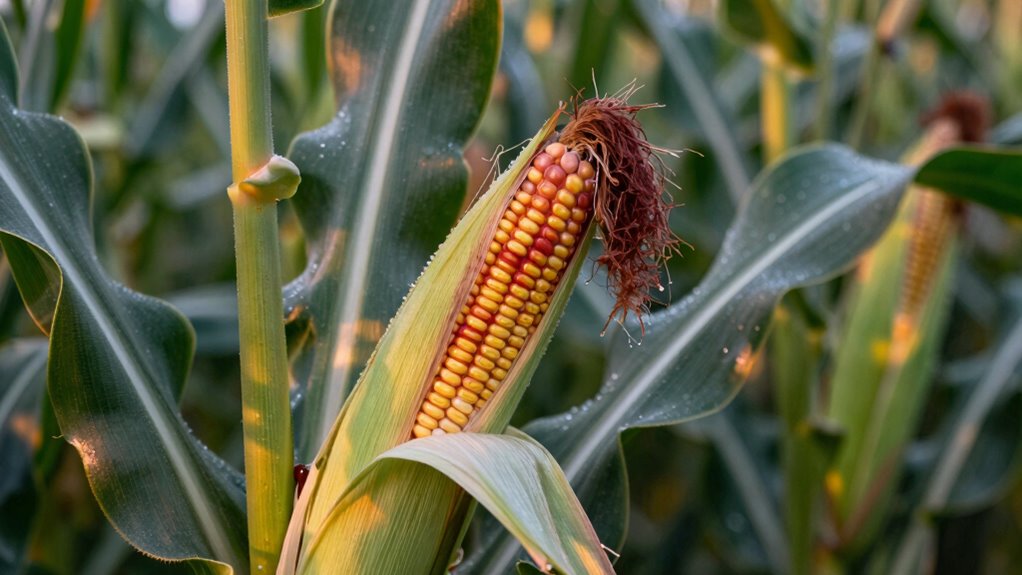

You might not realize it, but ear development issues in corn often start long before you see visible damage. Pest damage and genetic weaknesses can weaken plants early on, making them more vulnerable to deformities and uneven kernels later. Failing to control pests or select resilient seeds early can lead to problems that worsen over time. By understanding these hidden factors, you can take steps now to prevent future issues—keep going to discover how to protect your crop from the start.

Get garden gear delivered free — and shop member deals
- Fast, free delivery on millions of items
- Access to Prime Big Deal Days deals on October 6–7
- Prime Video, Amazon Music and more included
Key Takeaways
- Ear problems often begin at the silking stage, before visible symptoms appear.
- Poor seed selection and genetics can predispose ears to early developmental issues.
- Early pest damage, like to silks and kernels, disrupts normal ear formation.
- Neglecting early pest management allows pests to weaken ear development.
- Proactive crop management and resistant seed varieties prevent early ear deformities.

Genetic factors play a crucial role in how resilient your corn plants are to various stresses, including ear development problems. Some corn varieties are naturally more susceptible to uneven kernel formation because of their genetic makeup. If you’re planting hybrid seeds, it’s essential to choose those bred specifically for uniform ear growth and pest resistance. Selecting seeds with strong genetic traits for uniformity can drastically improve your chances of avoiding the early onset of the corn ear problem. It’s not just about yield; it’s about ensuring the plant’s genetics give it the best chance to develop healthy, evenly filled ears throughout the season.
Additionally, understanding the importance of genetic resilience can help you make more informed seed choices that enhance your crop’s ability to withstand pests and environmental stresses. Pest management is another vital factor that influences the early stages of corn development. Pests like corn earworms and infestations by aphids can damage silks and kernels, leading to uneven kernel fill and ear deformities. The damage caused by pests often starts before you even notice the problem, sometimes as early as the silking stage. If you neglect pest control early on, pests can weaken the plant’s ability to develop healthy ears, making the problem worse as the season progresses. Proper pest management involves scouting regularly, applying appropriate insecticides when necessary, and using integrated pest management strategies to keep pest populations under control. Doing so not only protects your crop from immediate damage but also helps maintain the plant’s overall health, reducing the likelihood of uneven kernel development caused by pest-related stress. Recognizing early pest detection as a crucial component can help prevent damage before it becomes extensive and harder to manage.
Furthermore, selecting the right seed varieties with proven resilience can significantly influence the overall health and uniformity of your crop. In essence, the early roots of the corn ear problem lie within your choice of seeds and your pest control practices. By selecting genetically resilient varieties and implementing effective pest management strategies from the start, you give your corn a much better chance of developing uniform, healthy ears. Ignoring these early factors can set the stage for uneven kernel fill later in the season, which ultimately impacts your yield and income. So, pay attention early—make informed decisions about genetics and pest control now, and you’ll be more likely to enjoy a healthy, productive harvest. Recognizing the importance of crop management practices can further improve your overall results and help prevent problems before they arise.
As an affiliate, we earn on qualifying purchases.
Frequently Asked Questions
How Can I Prevent the Problem From Affecting My Entire Crop?
To prevent the corn ear problem, you should practice pest management early and consistently. Inspect your fields regularly for signs of pests and use targeted control methods. Incorporate crop rotation to disrupt pest life cycles and reduce their populations. By combining these strategies, you minimize the risk of pests spreading across your entire crop, protecting your yield and ensuring healthier, more resilient corn plants throughout the season.
What Early Signs Indicate the Problem Might Be Developing?
Did you know that early pest identification can reduce crop loss by up to 80%? Look for small silks or chewed leaves as initial signs of the problem. Nutrient deficiency can also mimic pest damage, causing discoloration or weak stalks. Regularly inspect your plants, especially during early growth stages, to catch these signs quickly and address issues before they escalate into full-blown damage.
Are Certain Corn Varieties More Resistant to This Problem?
Some corn varieties are more resistant to the ear problem due to genetic resistance. When selecting seeds, look for those bred specifically for resistance traits. Additionally, practicing crop rotation helps reduce the buildup of pests and diseases that contribute to the problem. By combining resistant varieties with crop rotation, you can effectively minimize the risk and protect your corn crop from early ear issues.
How Does Weather Influence the Onset of the Corn Ear Problem?
Weather patterns and climate fluctuations directly influence when the corn ear problem begins. Sudden temperature drops or unseasonal rainfall can stress plants, causing ears to develop prematurely or unevenly. Warm, dry conditions tend to delay problems, while unpredictable weather accelerates them. You’ll notice that during years of erratic weather, the issue can start earlier, making it essential to monitor forecast trends and adapt your management practices accordingly.
Can Soil Health Impact the Likelihood of the Problem Occurring?
Yes, soil health impacts the likelihood of the corn ear problem. You should focus on maintaining a healthy soil microbiome, which promotes nutrient uptake and suppresses harmful pathogens. Additionally, ensuring a proper nutrient balance prevents deficiencies that can weaken your plants and make them more susceptible. By improving soil health through organic matter and crop rotation, you create a more resilient environment, reducing the chances of early ear problems in your corn.
hybrid corn seed resistant to pests
As an affiliate, we earn on qualifying purchases.
As an affiliate, we earn on qualifying purchases.
Conclusion
As you watch your corn grow, remember that the Corn Ear Problem is like an early shadow creeping over the fields, hinting at trouble before it fully appears. By paying close attention now, you can catch the signs early—like spotting dark clouds before a storm. Stay vigilant, nurture your crop, and you’ll weather the season’s challenges. With careful care, your corn can rise strong and vibrant, turning those looming shadows into a story of resilience.
As an affiliate, we earn on qualifying purchases.
corn silking stage pest management
As an affiliate, we earn on qualifying purchases.
As an affiliate, we earn on qualifying purchases.
Halloween Picks
halloween
As an affiliate, we earn on qualifying purchases.