If you notice swollen, galled roots, stunted growth, or yellowing leaves in your vegetable plants, nematodes might be the culprit. Root-knot nematodes cause these classic symptoms, reducing your plants’ ability to absorb water and nutrients effectively. Regularly inspect your roots and consider soil testing for confirmation. Managing soil health, crop rotation, and using cover crops can help control their spread. Keep exploring for more effective strategies to protect your garden from these invisible pests.
Key Takeaways
- Root knot nematodes cause swollen, galled roots that impair water and nutrient uptake in vegetables.
- Symptoms include stunted growth, yellowing leaves, poor yields, and wilting.
- Regularly inspect roots for galls or swelling for early detection.
- Soil testing confirms nematode presence when root symptoms are observed.
- Implement crop rotation and organic soil amendments to reduce nematode populations.
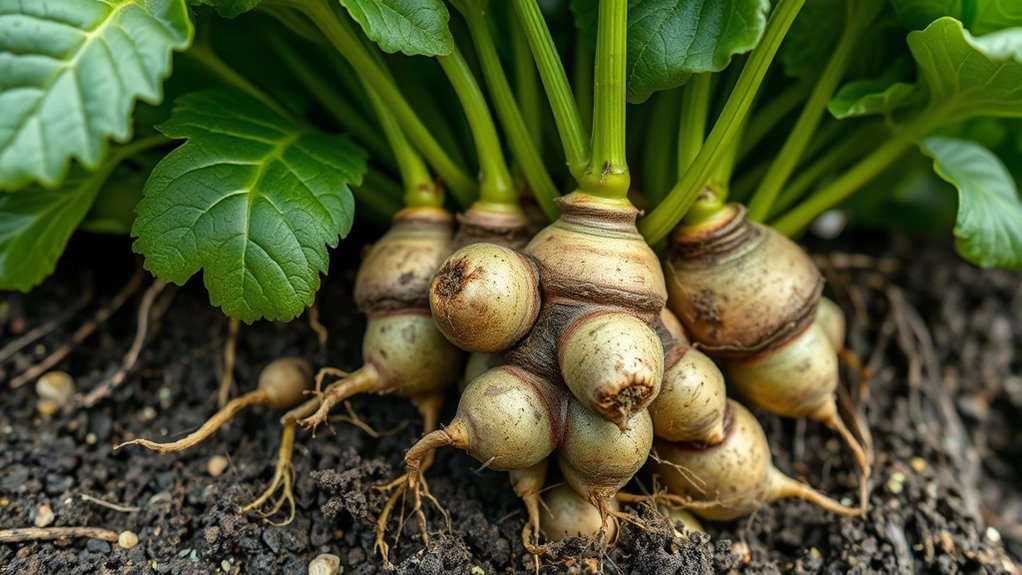
Nematodes are microscopic worms that can silently damage your vegetable garden, often going unnoticed until you see signs of poor plant growth or wilting. These tiny pests attack the roots of your plants, causing root knot symptoms that can seriously hinder your garden’s productivity. When nematodes invade, they compromise soil health, making it harder for your plants to absorb water and nutrients. This results in stunted growth, yellowing leaves, and uneven yields. Recognizing these symptoms early is essential, but prevention is even better. One effective way to manage nematode problems is through crop rotation, which disrupts their life cycle and reduces their populations over time.
Nematodes damage roots, cause poor growth, and can be managed effectively with crop rotation.
Soil health plays a fundamental role in controlling nematodes. Healthy, well-maintained soil supports beneficial organisms that naturally suppress pest populations. Incorporating organic matter, such as compost, enhances soil structure and boosts microbial activity. These microbes can outcompete or prey on nematodes, limiting their ability to damage your plants. Avoid over-fertilizing with nitrogen, as lush, rapid growth can attract nematodes. Instead, aim for balanced fertilization to keep your plants strong and resilient. Maintaining proper soil drainage also prevents conditions that favor nematode proliferation, since overly wet or poorly drained soils create an ideal environment for these pests.
Crop rotation is one of the most effective strategies to combat root knot nematodes. By changing the types of vegetables you plant each season, you deny nematodes their preferred hosts, breaking their reproductive cycle. For example, rotate susceptible crops like tomatoes, peppers, and eggplants with non-host crops such as corn, beans, or certain grasses. Cover crops like marigolds or mustard can also help suppress nematode populations when planted between main crops. These plants release natural compounds that are toxic or repellent to nematodes, providing a biological barrier. Healthy soil plays a vital role in reducing nematode populations, as it promotes beneficial microbes that naturally control pests. Consistent crop rotation not only reduces nematode populations but also improves soil health, making it harder for these pests to establish themselves in your garden.
Monitoring your plants regularly is essential for catching root knot symptoms early. Look for swollen, galled roots and stunted growth, and if you notice these signs, consider testing your soil for nematode presence. Combining good soil management practices with crop rotation creates a holistic approach to managing nematode infestations. Taking these steps will help protect your vegetables from their damaging effects and promote a healthier, more productive garden. Ultimately, understanding how soil health and crop rotation work together gives you powerful tools to minimize nematode damage and keep your vegetable garden thriving.
Frequently Asked Questions
How Can I Prevent Nematode Infestation Before Planting?
To prevent nematode infestation before planting, start with soil testing to identify any existing problems. Use resistant or tolerant vegetable varieties to reduce risk. Practice crop rotation by planting non-host crops like grasses or corn, which break the nematode life cycle. Additionally, incorporate organic amendments like compost to boost soil health. These steps help create an environment less favorable for nematodes and protect your garden naturally.
Are There Organic Methods to Control Root Knot Nematodes?
Yes, you can control root knot nematodes organically by using biological control methods like beneficial nematodes that target pests underground. Additionally, applying organic soil amendments such as compost, neem cake, or mustard meal boosts soil health and helps suppress nematode populations. These natural methods improve plant resilience and reduce nematode infestation without chemicals, creating a healthier garden environment.
What Specific Vegetable Varieties Are Resistant to Nematodes?
Did you know that choosing resistant vegetable varieties can reduce nematode damage by up to 90%? You should look for nematode resistant cultivars like certain tomato and cucumber varieties, which are bred specifically to resist root knot nematodes. Many resistant vegetable varieties are available and can be clearly labeled. By planting these resistant cultivars, you’ll give your garden a strong defense against nematodes and improve your crop yield.
How Do Soil Conditions Influence Nematode Populations?
Soil conditions considerably influence nematode populations. You’ll find that soil pH affects their survival; slightly acidic to neutral pH levels tend to favor nematodes, while highly alkaline soils can reduce their numbers. Additionally, soil rich in organic matter can either promote or suppress nematodes, depending on its type and management. Maintaining balanced organic matter and ideal soil pH helps control nematode populations, preventing infestations and protecting your vegetable garden.
Can Companion Planting Reduce Nematode Damage Effectively?
Yes, companion planting can reduce nematode damage effectively. By planting beneficial insects alongside your vegetables, you encourage natural pest control that keeps nematode populations in check. Additionally, practicing crop rotation disrupts the nematodes’ lifecycle, preventing them from establishing a strong presence. Combining these strategies creates a healthier garden environment, minimizing nematode damage and promoting vigorous plant growth without relying solely on chemical treatments.
Conclusion
Understanding nematodes is key to healthy vegetable gardens. Did you know that root-knot nematodes affect over 2,900 plant species worldwide? By recognizing symptoms early and taking action, you can protect your crops and boost yields. Don’t let these tiny pests ruin your harvest—stay vigilant and implement effective management strategies. With knowledge and care, you can keep your garden thriving and enjoy bountiful, healthy vegetables all season long.