Thrips are tiny insects that can seriously damage your onions and garlic by feeding on the sap, causing distorted growth, silvery streaks, and reduced yields. You should regularly monitor your crops for signs like silvery specks, black fecal spots, and curling leaves. Using sticky traps and targeted eco-friendly insecticides can help control them early. Maintaining good cultural practices and crop rotation further reduces infestations. Keep exploring to learn detailed strategies for managing thrips effectively.
Key Takeaways
- Thrips feed on onion and garlic sap, causing distorted growth, silvery streaks, and reduced yields.
- Regular monitoring with visual checks and sticky traps helps detect early thrips infestations.
- Eco-friendly control methods include insecticidal soaps, plant oils, and encouraging natural predators.
- Crop rotation with non-host plants and removing debris disrupts thrips life cycles and minimizes populations.
- An integrated approach combining cultural, biological, and chemical controls effectively manages thrips on onions and garlic.
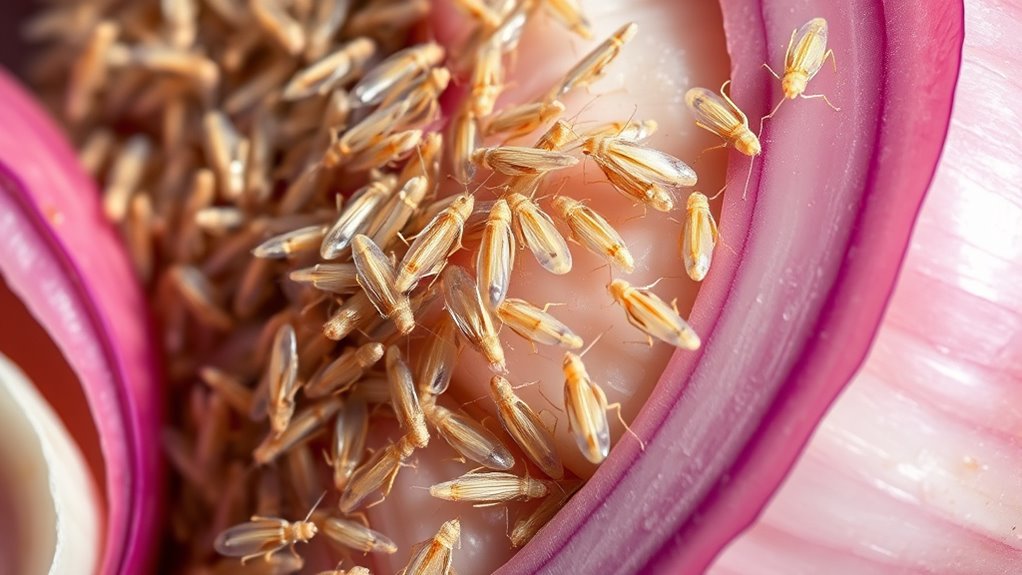
Thrips are tiny, elusive insects that can cause significant damage to onions and garlic if left unchecked. These pests feed on the plant’s sap, puncturing leaves and bulb scales, which results in distorted growth, silvery streaks, and reduced yield. If you notice curling or discoloration in your onions or garlic, thrips might be the culprit. Managing these pests requires a proactive approach, combining effective pest control strategies with good cultural practices to keep populations under control.
Thrips damage onions and garlic, causing distorted growth and reduced yield.
One of the most effective pest control strategies involves monitoring your crops regularly. Keep an eye out for early signs of infestation, such as silvery specks or black fecal spots on leaves. Using sticky traps can help catch adult thrips and give you an idea of their population levels. When you detect a problem, targeted insecticidal treatments can be applied, but it’s best to choose options that are eco-friendly and minimize harm to beneficial insects. Applying plant-based oils or insecticidal soaps can help reduce thrips numbers without disrupting the overall health of your garden.
In addition to direct control measures, crop rotation practices play a crucial role in managing thrips. Thrips tend to overwinter in crop residues and soil debris, so rotating onions and garlic with non-host crops can break their life cycle. For instance, planting legumes or other broadleaf vegetables that thrips don’t favor can reduce the likelihood of infestation in subsequent seasons. This practice not only diminishes thrips populations but also improves soil health and fertility, creating a more resilient environment for your crops. Incorporating cultural practices such as removing plant debris and weeds can further reduce thrips habitat and disrupt their breeding sites.
Integrated pest management (IPM) is another key component in controlling thrips. Combining cultural practices, biological controls, and chemical methods allows you to manage pests effectively while minimizing environmental impact. Encouraging natural enemies, like predatory mites and lacewing larvae, can help keep thrips populations in check naturally. Proper spacing and avoiding excessive fertilization can also make your onions and garlic less attractive to pests, as lush, overgrown plants tend to harbor higher thrips populations.
Frequently Asked Questions
How Do Thrips Affect Onion and Garlic Flavor?
You’ll notice that a pest infestation by thrips can cause flavor alteration in your onions and garlic. As they feed, thrips damage the plant tissues, leading to a bitter or off-flavor in the bulbs. This pest activity disrupts the natural flavor profile, making your crops less appealing. To prevent this, manage infestations early, and keep your plants healthy to maintain their characteristic, desirable flavor.
Are There Organic Methods to Control Thrips?
Yes, you can control thrips organically by encouraging beneficial insects like ladybugs and lacewing larvae, which naturally prey on thrips. Additionally, applying organic sprays such as neem oil or insecticidal soap can help reduce their numbers. Regularly inspect your plants, remove heavily infested foliage, and maintain healthy plant growth to make your garden less attractive to thrips. Combining these methods offers an effective, eco-friendly way to manage thrips naturally.
Can Thrips Transmit Diseases to Onions and Garlic?
Yes, thrips can transmit diseases to onions and garlic, acting as vectors for several plant pathogens. To minimize disease transmission, you should implement effective vector control strategies, such as using insecticidal soaps, introducing natural predators, and practicing crop rotation. Regular monitoring helps catch infestations early, reducing the risk of disease spread. Staying vigilant and applying integrated pest management techniques are key to protecting your crops from thrips-borne diseases.
When Is the Best Time to Monitor for Thrips?
You should monitor for thrips early in the season when their activity peaks—it’s like catching a wave at just the right moment. Regularly check your crops using a monitoring schedule, especially during the pest’s vulnerable stages in its life cycle. Typically, start monitoring just before and during the early growth stages, then continue weekly. This proactive approach helps you catch infestations early and manage them effectively.
What Is the Economic Threshold for Thrips Damage?
You should consider the economic threshold for thrips damage at about 2-3 thrips per leaf early in the season, increasing to 5-6 thrips later. When this threshold is reached, it signals that pest management is necessary to prevent economic impact. Monitoring regularly helps you catch infestations early, ensuring timely control measures to protect your crop’s yield and quality.
Conclusion
So, next time you see those tiny thrips throwing a party on your onions and garlic, just remember—they’re not just pests; they’re the uninvited guests ruining your culinary dreams. With a little vigilance and maybe some natural traps, you can keep them at bay. After all, who knew that tiny insects could cause such a fuss? Stay vigilant, or your kitchen might turn into a thrips-themed horror show—bon appétit!