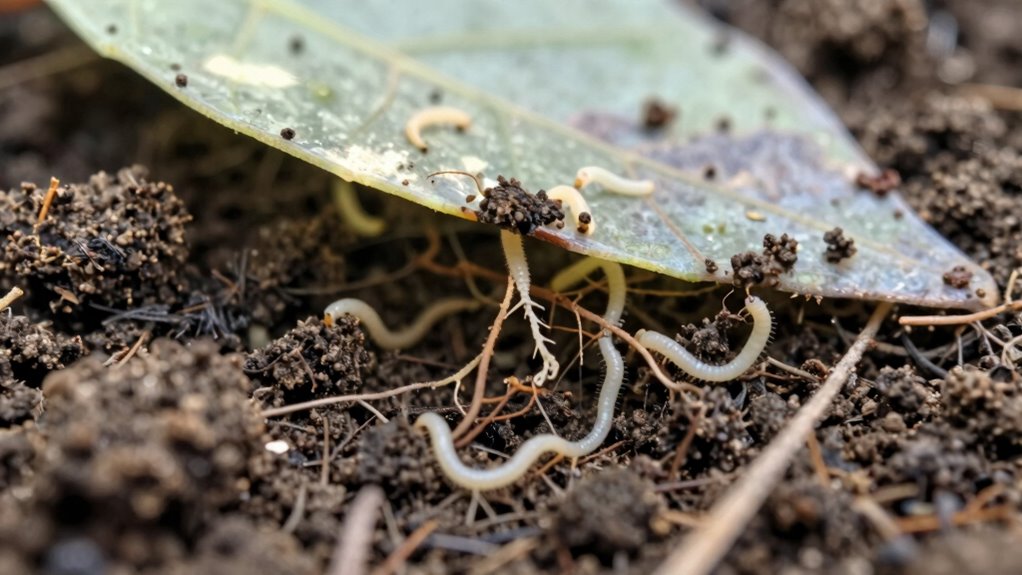

Root maggots start underground because their eggs are laid near the plant base, and once hatched, the larvae quickly burrow into the soil to feed on the roots. This underground activity happens before any visible signs show up on the leaves, making early detection tough. If you want to understand how to spot and prevent these pests early, keep exploring these important details.
Key Takeaways
- Root maggots lay eggs near plant bases, with larvae burrowing underground before symptoms appear above ground.
- Early underground activity causes root damage that isn’t visible until it affects plant health.
- Maggots feed on roots underground, making initial detection difficult until above-ground signs emerge.
- Damage occurs beneath the surface, delaying visible indicators like wilting or stunted growth.
- Monitoring soil health and pest activity is essential for early detection before above-ground symptoms develop.
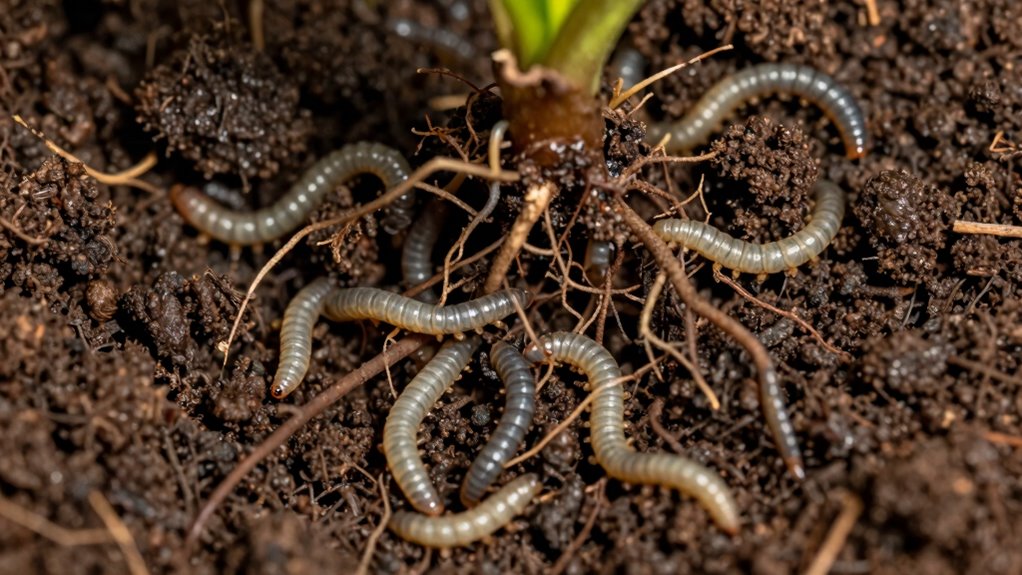
When root maggots begin to infest your garden, they usually start underground, making their presence hard to detect until damage becomes apparent. You might notice wilting leaves or stunted growth, but by then, the maggots have already caused significant harm beneath the surface. These pests are hidden invaders, and their early activity is often missed because they don’t show up on the plant’s leaves or stems initially. Instead, they burrow into the soil, attacking roots and disrupting the plant’s ability to absorb water and nutrients. This underground activity underscores the importance of maintaining healthy soil, as healthy soil can sometimes resist or slow down pest infestations. When your soil has good structure, proper drainage, and a balanced ecosystem, it becomes less inviting to root maggots and other pests. That’s why soil health plays a critical role in pest control; it’s not just about treating pests but creating an environment that discourages their development from the start. Ensuring your soil has a healthy ecosystem can be a key factor in preventing infestations. Understanding why root maggots start underground before leaves tell you anything is key to effective pest control. These maggots are the larvae of certain flies, which lay their eggs near the base of plants. When the eggs hatch, the tiny maggots immediately burrow into the soil to feed on roots. Their underground activity means that by the time you see visible signs above ground, the damage is often already extensive. This makes early detection difficult, emphasizing the need for preventative measures. Regular soil inspections and monitoring for adult flies can help you catch the problem early. Using organic mulches or crop rotation can also reduce the risk of infestations because they disrupt the life cycle of the pests. Applying beneficial nematodes or natural predators can also be effective, targeting the maggots in the soil before they cause major damage. Ultimately, controlling root maggots requires a proactive approach centered around soil health and pest control strategies. Maintaining a balanced soil environment discourages pests from establishing themselves, and integrated pest management practices help reduce reliance on chemical controls. Creating healthy soil conditions is essential for long-term pest prevention, as it promotes plant resilience and disrupts pest life cycles. Additionally, understanding the pest’s life cycle can help you time your interventions more effectively. You want to create conditions that make your garden less hospitable to these underground invaders, preventing the damage before it starts. Recognizing the early underground activity of root maggots allows you to act swiftly, protecting your plants and ensuring your garden stays healthy and productive.
beneficial nematodes for root maggots
As an affiliate, we earn on qualifying purchases.
As an affiliate, we earn on qualifying purchases.
Frequently Asked Questions
How Can I Prevent Root Maggots From Appearing Underground?
To prevent root maggots underground, you should practice soil sterilization before planting, which helps eliminate existing pests. Additionally, introducing beneficial nematodes into your soil can naturally control maggot populations by targeting their larvae. Keep your garden healthy by removing plant debris and rotating crops regularly. These steps make your soil less inviting for maggots, reducing the chances of infestation and protecting your plants’ roots effectively.
Are Root Maggots Harmful to All Types of Plants?
Root maggots are harmful to many plants, especially those with poor plant nutrition and inadequate soil drainage. They attack the roots, causing stunted growth and wilting. You should monitor plants closely and improve soil conditions by enhancing drainage and providing proper nutrients. This reduces the risk of maggot infestations, protecting a wide variety of plants from damage. Being proactive helps keep your garden healthy and maggot-free.
What Are the Signs of Root Maggot Infestation?
You’ll notice signs of a root maggot infestation through poor plant growth, yellowing leaves, and wilting despite proper watering. Dig into the soil to check for tiny, white larvae, which are clear indicators of pest presence. By monitoring soil health and practicing pest identification, you can catch infestations early and prevent extensive damage to your plants. Regular inspection helps you act swiftly and maintain healthy, thriving plants.
Do Root Maggots Spread to Nearby Gardens?
Yes, root maggots can spread to nearby gardens, especially if soil health isn’t maintained. These pests cling to the soil and easily move through contaminated areas, making pest identification essential. If you notice signs of infestation, act fast to prevent them from spreading. Regularly inspecting your soil and practicing crop rotation can help keep these underground invaders at bay, protecting your entire garden ecosystem.
When Is the Best Time to Treat Root Maggots Underground?
You should treat root maggots underground as soon as you notice signs of infestation, typically early in the season. Use soil fumigation to kill larvae before they damage roots, and apply beneficial nematodes to naturally control the maggots. Timing is vital, so act early in spring when soil temperatures are suitable. Regular monitoring helps guarantee you catch infestations early, preventing widespread damage to your plants.
soil health testing kit
As an affiliate, we earn on qualifying purchases.
As an affiliate, we earn on qualifying purchases.
Conclusion
So, next time you see those tiny maggots tunneling underground, remember—they’re not just pests, they’re underground ninjas plotting your garden’s downfall! Ignoring their sneaky moves could turn your lush paradise into a barren wasteland faster than you can say “root rot.” Stay vigilant, act quickly, and don’t let these underground invaders turn your prized plants into mere memories. Because if you don’t stop them now, your garden might just vanish into thin air—like magic, but way scarier!
organic pest control for root maggots
As an affiliate, we earn on qualifying purchases.
As an affiliate, we earn on qualifying purchases.
crop rotation tools for pest prevention
As an affiliate, we earn on qualifying purchases.
As an affiliate, we earn on qualifying purchases.