TL;DR
A beginner-focused guide explains how to grow tomatoes in containers by matching pot size and support to the variety’s mature growth habit. It recommends full sun, a well-draining potting mix, regular moisture checks and label-directed feeding; local weather and the plant’s needs affect the exact care schedule.
A beginner’s guide to growing tomatoes in containers lays out how to select a variety, choose a suitable pot and manage water, sunlight and support, alongside container gardening supplies that can help. Its central advice is to match the container to the plant’s mature size and growth habit, since small fruit does not necessarily mean a compact plant.

Get garden gear delivered free with Prime
- Fast, free delivery on millions of items
- Prime Video, Amazon Music and more included
- Member-only deals all year
The guide distinguishes determinate tomatoes, which grow to a more defined size, from indeterminate varieties, whose vines keep extending through the season. Dwarf and patio tomatoes are bred for a compact habit, but gardeners are advised to check the stated needs of each variety rather than infer its size from the fruit. Cherry tomatoes can be vigorous vines, while slicing and paste varieties also differ in their space and support requirements.
For container size, the guide says five gallons may suit compact varieties, while vigorous plants generally benefit from 10 gallons or more. Containers need drainage holes; depth alone is not enough if the roots lack volume. Gardeners should set heavy pots in place before filling them and consider balcony weight limits. The recommended growing medium is container potting mix, not garden soil alone, and the guide advises against adding gravel beneath the mix; gardeners can also consult backyard gardening kits for other growing essentials.
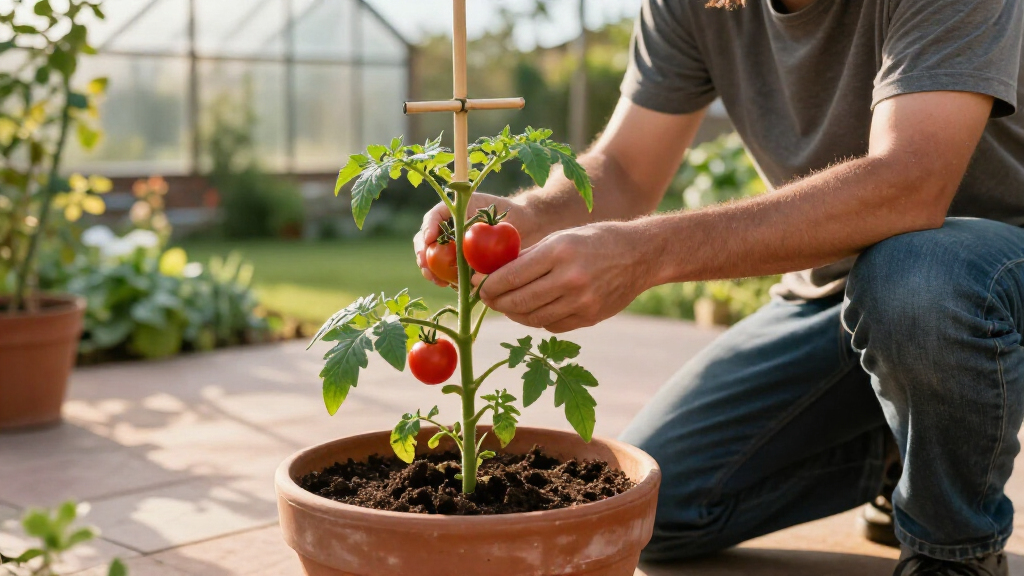
Tomatoes need a sunny location, generally receiving six to eight hours of direct light each day. After frost danger has passed and conditions have warmed, a seedling can be planted with part of its stem buried after lower leaves are removed; grafted plants should follow nursery directions, with the graft union kept above the mix. The guide recommends one plant per pot and installing a cage or stake at planting time to avoid disturbing roots later.
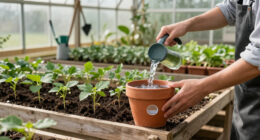
Care depends on regular checks rather than a fixed watering calendar, and gardening books can offer additional growing guidance. Feel below the surface and water when the upper inch of mix feels dry, applying water slowly until it drains from ordinary pots. Heat and wind can mean checking daily or more often; cooler conditions reduce demand. Feed according to the potting mix and fertilizer labels, accounting for nutrients already present. Excess nitrogen can promote leafy growth without improving fruit production.
New to Container Gardening?Grow Tomatoes with a Plan
Choose a pot and support for the tomato’s mature growth habit. Sunlight, moisture checks and care needs vary with the plant and local weather.
Match the Plant to Its Pot
Fruit size alone does not reveal how much room a tomato needs.
Dwarf and patio types
Check the variety’s mature size and container needs before planting.
Plan for growing vines
Indeterminate tomatoes such as Sungold need a large pot and tall support.
Give roots room
Use a container with drainage holes and enough volume for mature growth.
Set Up Before Planting
A stable setup helps avoid disturbing roots later.
Select a sunny location and leave space between pots for air circulation.
Set heavy pots in place first; consider balcony weight limits. Use container potting mix, not garden soil alone.
Plant after frost danger has passed and conditions have warmed. Install a cage or stake at planting time.
Care by Conditions
Check the plant and its growing mix instead of following a fixed calendar.
- Feel the mix; water when the upper inch feels dry.
- Water slowly until it drains from ordinary pots.
- Heat and wind may call for daily or more frequent checks.
- Feed according to potting mix and fertilizer labels.
- Tie extending stems loosely to their supports.
- Inspect leaf undersides and remove damaged foliage.
Choosing Pots That Fit Tomato Growth
Container gardening lets people grow tomatoes on a patio or balcony without a large yard, but limited root space makes planning matter. A pot that is too small can leave a vigorous plant short of room, while crowded plants compete for water and nutrients. Matching the pot and support to the variety can help gardeners avoid preventable problems and make better use of a small growing area.
The guide also sets expectations: container tomatoes require ongoing moisture checks and support, and hot or windy weather can quickly change watering needs. That is useful for beginners deciding whether to start with one plant, how much space to set aside, and whether their location can provide enough sun and a stable place for a heavy container.
Products Worth Considering

Rachio 3 Smart Sprinkler Controller, 16-Zone

Greenworks 48V Cordless Lawn Mower, String Trimmer, and Blower Combo Kit

Orbit B-hyve 12-Zone Smart Indoor/Outdoor Sprinkler Controller
As an affiliate, we earn on qualifying purchases.
Variety, Fruit and Space Planning
The guide groups tomatoes by how their fruit may be used, including cherry tomatoes for snacks and salads, slicing types for sandwiches and fresh dishes, and paste tomatoes for sauces and cooking. It lists examples such as Sungold and Sweet Million among small-fruited choices, Cherokee Purple and Green Zebra among slicers, and San Marzano and Roma VF among paste varieties. These examples do not establish that every named variety has the same container requirements.
Before buying seed or seedlings, the guide says to check the variety’s growth habit and mature size. For instance, Sungold is described as a vigorous indeterminate cherry tomato, so it needs a large pot and tall support. Small fruit is not a reliable sign of a small plant. Seedlings raised indoors should be gradually exposed to outdoor conditions before planting.
Care Depends on Local Conditions
The source is a practical gardening guide, not a report of a new study or a measured trial. It gives general recommendations but does not identify a publication date, author, location or climate, and it does not provide results comparing pot sizes, varieties or watering methods.
Exact watering frequency remains dependent on weather, container material, plant size and growing mix. The guide says hot, windy conditions may require watering daily or more, while cool weather reduces demand; it does not prescribe one schedule for all gardens. It also does not give a universal fertilizer amount or pest treatment, instead directing readers to product labels and to identify problems before choosing a treatment.
Check Plants as They Grow
As vines extend, gardeners should tie stems loosely to supports, inspect the undersides of leaves for pests and remove damaged foliage. Indeterminate plants need continued attention as they grow. The guide cautions against heavy pruning of determinate tomatoes because it can remove future fruiting growth.
Gardeners should keep checking moisture and follow the potting mix and fertilizer labels through the season. If blossom-end rot appears, the guide recommends correcting uneven watering before assuming the plant needs extra calcium. No harvest timetable is provided; the next steps depend on the selected variety and its growing conditions.
Key Questions
How large should a container be for a tomato plant?
The guide says five gallons may suit compact varieties, while vigorous plants generally benefit from 10 gallons or more. Check the variety’s mature size and container recommendations before planting.
How much sunlight do container tomatoes need?
Choose a location that receives about six to eight hours of direct sunlight daily, according to the guide. Leave space between pots to support air circulation and reduce crowding.
How often should I water tomatoes in pots?
Check the mix rather than relying on a set calendar. Water when the upper inch feels dry; hot or windy conditions may require daily checks or more, while cooler weather can reduce watering needs.
Can cherry tomatoes grow in a small pot?
Not necessarily. Some cherry varieties, including Sungold, are vigorous indeterminate vines. Small fruit does not mean a compact plant, so check its growth habit and plan for a large container and sturdy support where needed.
Source: groworganic.com