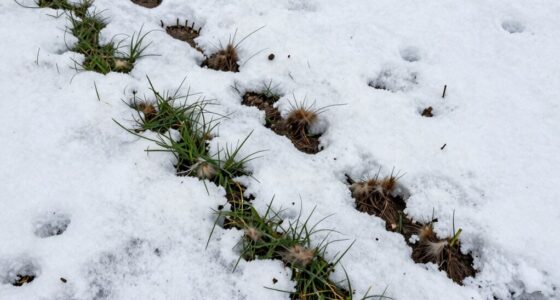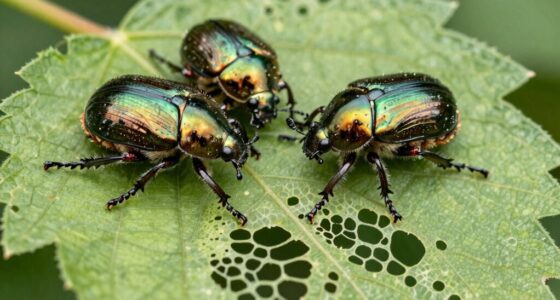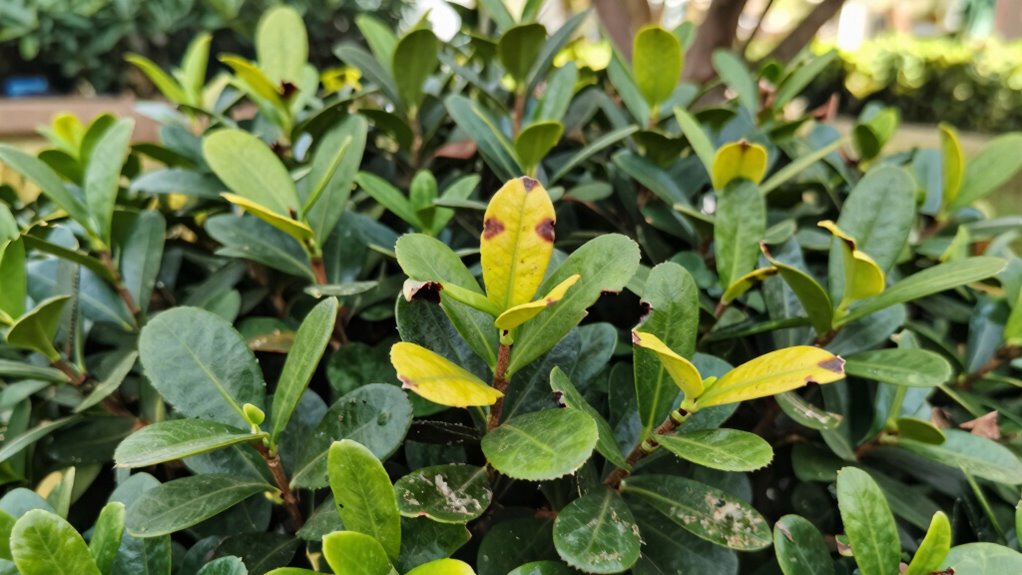
If you notice yellowing, wilting leaves, or uneven color, don’t ignore these signs—they indicate stress or nutrient deficiencies. Watch for pests like aphids or mites, especially if you see sticky residue or webbing. Poor soil conditions can weaken your boxwood; consider testing the soil for pH or nutrients. Early action is key to preventing serious damage. Keep an eye out, and discover how to address these issues before they escalate.

Get garden gear delivered free with Prime
- Fast, free delivery on millions of items
- Prime Video, Amazon Music and more included
- Member-only deals all year
Key Takeaways
- Yellowing, wilting, or uneven leaf color signals potential disease or nutrient deficiencies needing prompt attention.
- Presence of webbing, sticky residue, or tiny pests indicates an active pest infestation.
- Slow growth or pale leaves suggest soil health problems like compaction or nutrient imbalance.
- Sudden leaf spotting or damage can be early signs of pests, diseases, or environmental stress.
- Regular soil testing and inspection help prevent long-term health issues and promote resilient boxwoods.
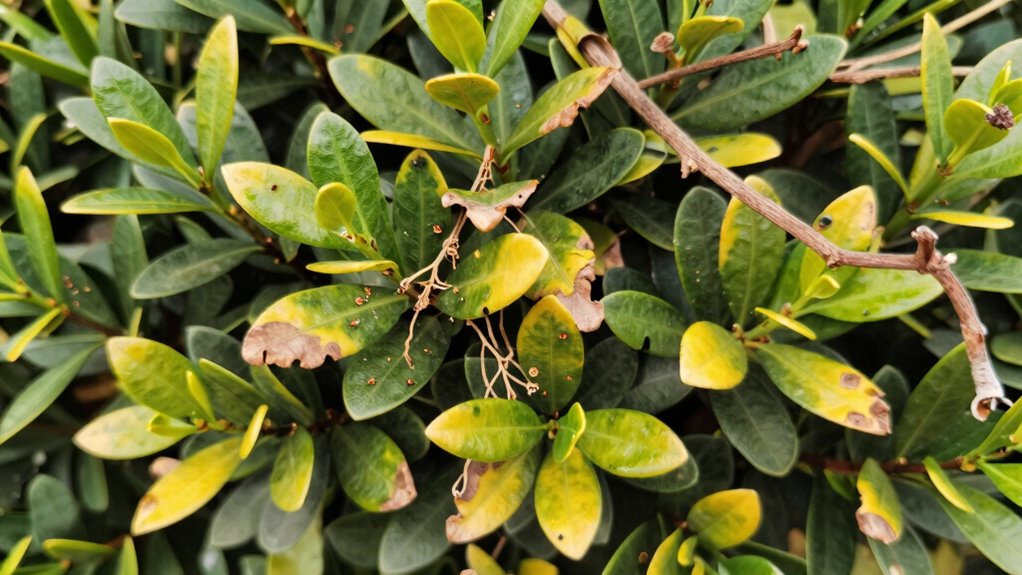
Boxwoods are a popular choice for landscaping, but spotting trouble signs early can save your plants from serious damage. When you notice your boxwood’s leaves yellowing or wilting unexpectedly, it’s time to investigate more closely. One of the first steps you should take is pest identification. Tiny pests like aphids, mites, or scales often hide on the undersides of leaves or along stems, sucking sap and weakening the plant’s overall health. If you spot sticky residue, webbing, or small moving insects, act quickly. These pests can multiply rapidly and cause significant damage if left unchecked. Regularly inspecting your plants and removing pests early can prevent infestations from spreading or becoming more severe.
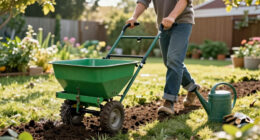
Alongside pest issues, soil health plays a critical role in your boxwood’s health. Poor soil conditions—such as compaction, nutrient deficiency, or improper pH—can make your plants more vulnerable to pests and diseases. If you notice your boxwood’s growth has slowed, or if the leaves are pale or unevenly colored, it might be a sign that the soil isn’t providing the right nutrients. Conducting a soil test can reveal deficiencies in key elements like nitrogen, phosphorus, or potassium, or highlight pH imbalances that hinder nutrient uptake. Improving soil health by amending it with compost or appropriate fertilizers can restore balance and boost your plant’s strength. Additionally, understanding soil science can help you develop more effective care strategies. Recognizing how soil conditions influence plant health emphasizes the importance of soil testing as part of your regular garden maintenance. Being proactive about soil health management can greatly reduce the risk of future problems and promote thriving boxwoods. Maintaining proper soil conditions not only supports healthy growth but also enhances the plant’s natural defenses against pests and diseases.
As an affiliate, we earn on qualifying purchases.
Frequently Asked Questions
How Often Should I Inspect My Boxwood for Problems?
You should inspect your boxwood weekly to catch problems early. During each check, look for signs like discolored leaves or pests. Use proper pruning techniques to maintain its shape and health, removing any dead or diseased branches. It’s also wise to perform soil testing annually to guarantee your plant’s nutrients are balanced. Regular inspections help you address issues promptly, keeping your boxwood vibrant and healthy.
Can Boxwood Trouble Signs Vary by Season?
Yes, boxwood trouble signs can vary dramatically with the seasons, almost like a rollercoaster ride of issues! In spring, you might notice new pest migration or the need for seasonal pruning to keep it healthy. Summer can bring drought stress or fungal problems, while fall and winter may reveal leaf discoloration or dieback. Staying vigilant year-round helps you catch these signs early, keeping your boxwood thriving through every season!
Are There Preventive Measures to Avoid Boxwood Issues?
Yes, you can prevent boxwood issues by taking proactive steps. Regular pest identification helps catch problems early, while soil testing guarantees your plants have the right nutrients and pH levels. Keep your boxwoods healthy by maintaining proper watering, pruning, and mulching. Addressing pests promptly and adjusting soil conditions based on test results can considerably reduce disease risk and promote strong, thriving plants.
What Tools Are Best for Diagnosing Boxwood Problems?
You should use a soil testing kit to check for nutrient deficiencies and pH imbalances that could affect your boxwood. Additionally, employ a magnifying glass or pest identification guide to closely examine leaves and stems for signs of pests like aphids or mites. These tools help you accurately diagnose problems early, allowing for targeted treatments and healthier boxwoods. Regular monitoring with these tools keeps issues manageable.
How Long Does It Take to See Improvement After Treatment?
You’ll typically see improvement within a few weeks after treatment, but it depends on factors like soil moisture and nutrient deficiency. Ensuring your boxwood gets proper watering and fertilization accelerates recovery. Keep an eye on soil moisture levels to prevent further stress, and address any nutrient deficiencies promptly. Consistent care helps your boxwood bounce back faster, so stay vigilant and adjust your maintenance routine as needed.
As an affiliate, we earn on qualifying purchases.
Conclusion
If you notice any trouble signs in your boxwood, don’t ignore them—think of it as your plant’s desperate SOS. Address issues promptly, or risk your beloved shrub turning into a lifeless stick in the blink of an eye. Catch problems early, and you can save your greenery from complete devastation. Your boxwood’s health is like a fragile glass—handle it with care, or it could shatter beyond repair in a heartbeat.
boxwood fertilizer and nutrients
As an affiliate, we earn on qualifying purchases.
As an affiliate, we earn on qualifying purchases.
pest inspection tools for plants
As an affiliate, we earn on qualifying purchases.
As an affiliate, we earn on qualifying purchases.
Fall yard work Picks
leaf blowers
As an affiliate, we earn on qualifying purchases.