Hoverflies, or syrphids, are important for your garden because they pollinate flowers while visiting for nectar. Their larvae are natural pest controllers, feeding on aphids and other harmful insects, reducing your need for pesticides. They thrive around flowering plants and help keep ecosystems balanced. If you want to know how to attract more hoverflies and maximize their benefits, there’s more to discover about their roles and how to support them effectively.
Prime for Young Adults — start your free trial
Fast free delivery, streaming and member deals for eligible 18–24 year olds.
As an affiliate, we earn on qualifying purchases.
Key Takeaways
- Hoverflies resemble bees or wasps but are primarily pollinators, visiting flowers for nectar and aiding plant reproduction.
- Adults facilitate pollination by transferring pollen between flowers during nectar collection.
- Larvae prey on pests like aphids and scale insects, naturally reducing pest populations.
- Their dual role supports healthy ecosystems and sustainable gardening by combining pollination and pest control.
- Increasing native flowering plants and avoiding pesticides promote hoverfly populations and their beneficial activities.
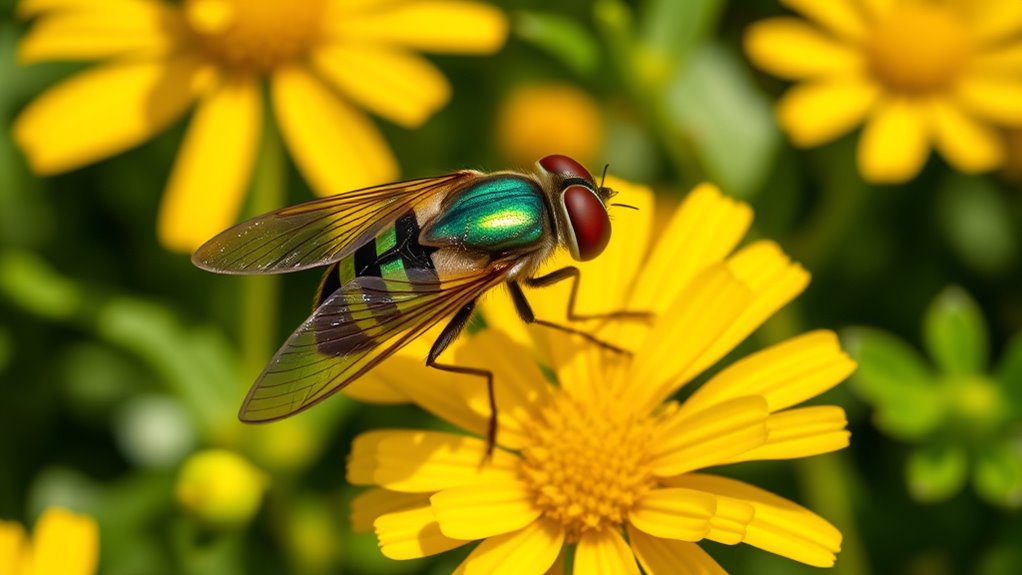
Hoverflies, often mistaken for tiny bees or wasps, play an essential role in both pollination and pest control. As an observer, you’ll notice that their presence benefits gardens and farms alike, thanks to their unique life cycle and behaviors. During their adult stage, hoverflies are vital pollinators, visiting flowers for nectar and transferring pollen from one bloom to another. This activity helps plants produce fruits and seeds, making hoverflies crucial for maintaining healthy ecosystems and productive crops. Their ability to hover and dart quickly between flowers allows them to pollinate efficiently, often competing with bees for the best floral sites.
Beneath their delicate appearance, hoverflies’ larvae actively contribute to pest control through larval predation. You might find that the larvae are voracious feeders, targeting common garden pests like aphids, thrips, and scale insects. These larvae are often found on plant stems or undersides of leaves, where they hunt for their prey. By consuming large numbers of pests, larvae help reduce the need for chemical pesticides, promoting a more sustainable way to protect your plants. Their predation is highly specific; they seek out pest insects with precision, which means they’re less likely to harm beneficial insects or the plants themselves.
As an enthusiast or gardener, you’ll likely appreciate how hoverflies bridge the gap between natural pest control and pollination. During the warmer months, you may notice an increase in hoverfly activity around flowering plants and pest-infested areas. The adults, drawn to nectar, often visit a variety of flowers, from brightly colored blooms to more modest blossoms, ensuring that pollination takes place across diverse plant species. Meanwhile, the larvae do their work silently, often unnoticed but highly effective at keeping pest populations in check. Encouraging their presence by planting a variety of nectar-rich flowers and avoiding pesticides that could harm them is highly beneficial.
Understanding the dual role of hoverflies helps you see their value in your garden or farm. Encouraging their presence involves planting a variety of nectar-rich flowers and avoiding pesticides that could harm them. They’re resilient and adaptable, flourishing in a range of environments, and their presence signals a healthy, balanced ecosystem. By supporting hoverflies, you’re not just fostering pollination but also leveraging natural pest control, making your gardening efforts more eco-friendly and sustainable. Their life cycle showcases a remarkable synergy—adults pollinate, larvae prey—highlighting how nature’s design promotes mutual benefits without human intervention. Recognizing the importance of native plants can further enhance hoverfly populations and their beneficial roles.
As an affiliate, we earn on qualifying purchases.
Frequently Asked Questions
How Can I Attract Hoverflies to My Garden Naturally?
To attract hoverflies naturally, focus on native plant selection that provides nectar and pollen, like daisies, fennel, and dill. Enhance your garden habitat by avoiding pesticides and creating diverse flowering areas. Leave some undisturbed spots for larvae to develop, and include compost piles or mulch. These steps will draw hoverflies, benefiting your garden’s pollination and pest control. Your garden will thrive with their presence and natural pest management.
Are Hoverflies Harmful to Humans or Pets?
Think of hoverflies like gentle neighborhood patrols—they don’t bite or sting, so hoverfly bites are unheard of. They lack hoverfly toxins that could harm humans or pets. I once watched a hoverfly land softly on a flower, showing how harmless they are. Rest assured, these insects are safe around people, acting more like friendly pollinators than threats, so you can enjoy their presence worry-free.
What Specific Plants Attract Hoverflies for Pollination?
You can attract hoverflies by planting native wildflowers like coneflowers, black-eyed Susans, and daisies, which provide nectar and pollen. Fragrant herbs such as dill, fennel, cilantro, and thyme also draw them in, offering additional food sources. These plants not only support hoverfly populations but also enhance your garden’s pollination and ecosystem health, making your outdoor space more vibrant and productive.
How Do Hoverflies Differentiate Between Pests and Flowers?
Imagine hoverflies as tiny detectives, using visual cues and olfactory signals to distinguish pests from flowers. They’re drawn to bright colors and fragrant scents from blooms, much like how you’re attracted to a delicious aroma. When they spot a pest, they recognize it through specific visual cues like movement or shape, and olfactory signals indicating distress. This keen sensory system helps hoverflies efficiently find nectar and target pests for predation.
Can Hoverflies Be Used Effectively in Organic Pest Control?
Yes, hoverflies can be used effectively in organic pest control. They play a crucial role in biological control by preying on aphids and other soft-bodied pests, reducing the need for chemical pesticides. You can promote their presence by planting diverse flowers that attract them, integrating hoverflies into your pest management strategy. Their natural predation helps maintain pest levels naturally, making them a sustainable and eco-friendly option for organic growers.
pollinator friendly garden plants
As an affiliate, we earn on qualifying purchases.
As an affiliate, we earn on qualifying purchases.
Conclusion
As you uncover the fascinating world of hoverflies, you’ll realize they’re more than just pretty pollinators. Their unexpected role as predators could hold the key to natural pest control, but what else are they hiding? The more you learn, the more mysterious their true impact becomes. Will these tiny insects become your secret weapon in gardening or agriculture? The answer lies in their surprising dual nature—and the story is far from over.
natural pest control hoverfly larvae
As an affiliate, we earn on qualifying purchases.
As an affiliate, we earn on qualifying purchases.
nectar-rich flowering plants for pollinators
As an affiliate, we earn on qualifying purchases.
As an affiliate, we earn on qualifying purchases.
Fall yard work Picks
leaf blowers
As an affiliate, we earn on qualifying purchases.